Odd AlmanacSearch

When intelligence changes the pace of history

Historical discontinuity, intelligence explosions and the limits of recursive improvement.

4 entries · 4 sections

Editorial illustration: an hourglass with falling sand
Editorial illustration · Z13 visual study

These sources trace a family of technological arguments, not a single prophecy. A change in civilization, a machine capable of improving machine design, and a network becoming superhuman are related possibilities with different assumptions. None of the sources establishes a quantum trigger, UAP disclosure or spiritual enlightenment.

The historical vocabulary

One entry: Ulam’s 1958 recollection of von Neumann on accelerating technology, a retrospective account rather than a treatise.

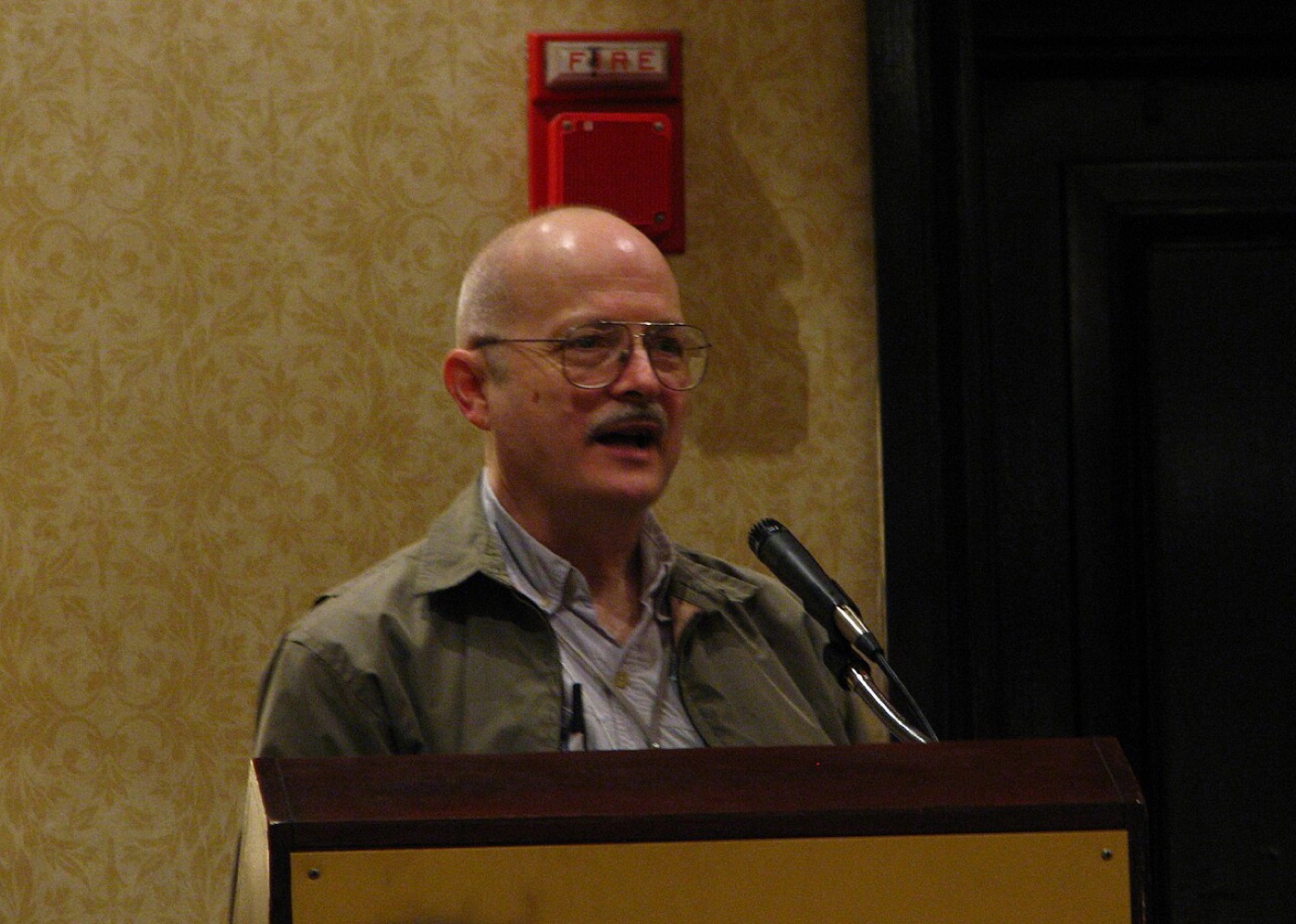
Black-and-white badge photograph of a smiling man in a dark coat with a photo-bar across his chest
Stanislaw Ulam, Los Alamos identity-badge photograph, c. 1940s. Los Alamos National Laboratory · LANL attribution licence (PD-LosAlamos on Commons)

History & recordHistorical recollection · 1958

Ulam · An approaching historical discontinuity

Ulam’s 1958 memoir recalls von Neumann discussing accelerating technology and a point beyond which familiar human affairs could not continue.

In his 1958 memoir, Ulam recalls a conversation with von Neumann about accelerating technology approaching a point beyond which familiar human affairs could not continue. This is a retrospective account of a conversation, not a surviving singularity treatise by von Neumann, a precise prediction date, or the same claim as his earlier work on reproducing automata. The distinction matters: reproducing a machine and improving the intelligence that designs machines are different processes.

The original AMS article could not be fetched. Archival metadata and the recollection reproduced by Vinge and Bostrom were checked; the published memoir was not directly inspected.

Stanislaw Ulam · free reading link pendingInstitute for Advanced Study · free reading link pending
Source details & what was checked
  • Stanislaw Ulam · 1958
    Original AMS fetch blocked. IAS archive metadata checked; relevant recollection checked as reproduced in Vinge and Bostrom, not directly in the published memoir.
    John von Neumann 1903–1957 · free reading link pending · In the source library
  • Institute for Advanced Study · 1957–1958
    Official archival record checked; draft PDF not retrieved.
    Ulam obituary draft archive · free reading link pending · In the source library

Back to sections ↑

Intelligence improves the inventor

Good’s 1965 speculative essay argues that a machine surpassing human intellect could design better machines, producing an intelligence explosion.

Editorial illustration: interlaced spirals with dots
Editorial illustration · Z13 visual study

Theory & argumentOriginal speculative AI essay · 1965

Good · The intelligence explosion

Good’s 1965 speculative essay: a machine exceeding human intellect could design a better machine, and its last-invention conclusion carries a control condition.

Good’s 1965 essay argues that a machine exceeding human intellectual abilities could design a better machine, producing an intelligence explosion. His last-invention conclusion includes a control condition; it is not an unconditional promise of abundance. Good explicitly labels the paper speculative and supplies no construction blueprint. Its mechanism is improved machine design, not a program merely copying itself or revising its own text. The historical argument is identifiable even though its practical conditions remain questions.

The original scan's filename says 1966; the original copyright and university reprint establish 1965. This is a historical argument, not verification that a current system can trigger it.

Source details & what was checked
Back to sections ↑

Several routes, not one machine

Vinge’s 1993 essay lists four routes beyond human intelligence: computers, networks, human–computer interfaces and biological enhancement.

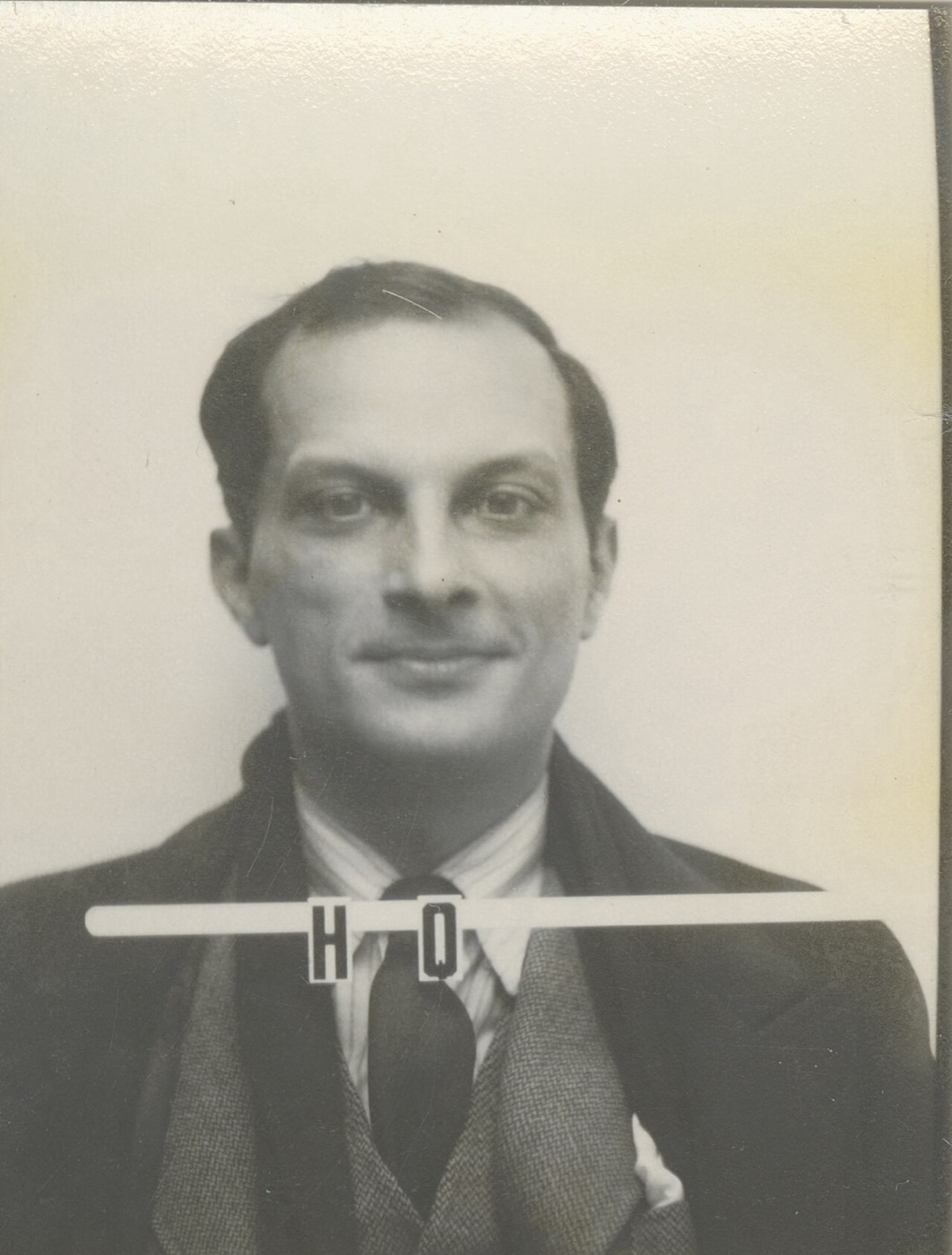
Bald man in aviator glasses and a green jacket speaking at a wooden lectern against patterned wallpaper
Vernor Vinge speaking at a podium, 20 January 2006; the file page names the event only as one where he was 'Pro Guest of Honor'. Snapshot quality; later photograph than his 1993 essay. Dave Hogg (Flickr) · CC BY 2.0

Theory & argumentOriginal conference forecast · 1993

Vinge · Computers, networks, interfaces and biology

Vinge’s 1993 essay proposes four routes past human intelligence, from computers and networks to interfaces and biology; no single machine is required.

Vinge’s 1993 essay proposes four routes beyond human intelligence: superhuman computers, awakening networks and their associated users, intimate human–computer interfaces, and biological enhancement. His forecast of emergence within thirty years was the author’s prediction, not a NASA institutional finding or proof of inevitability. The breadth matters: his argument does not require a single isolated computer. Nor does awakening here establish spiritual revelation; it describes a proposed transition in cognitive capability and the resulting limits of ordinary forecasting.

Presented March 30–31, 1993, at Vision-21; NASA's proceedings record is dated December 1, 1993. The historical forecast is preserved as a forecast.

Source details & what was checked
Back to sections ↑

Why recursion does not guarantee runaway

Bostrom’s essay qualifies the explosion idea: positive feedback alone does not prove it, because successive improvements may become harder.

Man in a white shirt and glasses gesturing with both hands while seated in a grey armchair on a stage
Nick Bostrom on stage at Collision 2019, Toronto, 23 May 2019. Collision Conf (photo by Stephen McCarthy / Collision via Sportsfile) · CC BY 2.0

Theory & argumentPhilosophical scenario analysis · 2007 draft / 2009 publication

Bostrom · Improvement must outpace difficulty

A prominent proponent’s qualification: Bostrom says positive feedback alone cannot prove an intelligence explosion, since improvements may get harder.

Bostrom separates two propositions often bundled together: an abrupt transition is possible, and it will happen soon. He explains that positive feedback alone cannot prove an intelligence explosion: successive improvements may become harder, so intelligence gains must outpace that difficulty for long enough. His essay considers gradual posthuman development alongside abrupt change, extinction, collapse and plateau. This is an internal qualification from a prominent proponent, not a blanket dismissal or a fixed countdown. Feasibility and the structure of available improvements remain essential.

Complete draft circulated in 2007; published in 2009. The paper's conditional analysis does not validate a specific future deadline.

Source details & what was checked
Back to sections ↑