Odd AlmanacSearch

The Great Filter: behind us or ahead?

Rare origins, technological danger and the uncertain meaning of a quiet sky.

5 entries · 3 sections

Editorial illustration: many dots narrowing through a funnel to one
Editorial illustration · Z13 visual study

The Great Filter asks why apparently promising planetary starting points have not produced conspicuous, lasting expansion around us. It can mean rare evolutionary transitions, future failure, or a combination. AI becomes one proposed technological barrier; uncertainty about life’s origins supplies a competing explanation. These arguments neither establish an empty galaxy nor resolve individual UAP reports.

Where the argument begins

Hanson’s 1998 essay frames the filter as a probability barrier; Bostrom’s 2008 argument asks what finding independent life would imply about it.

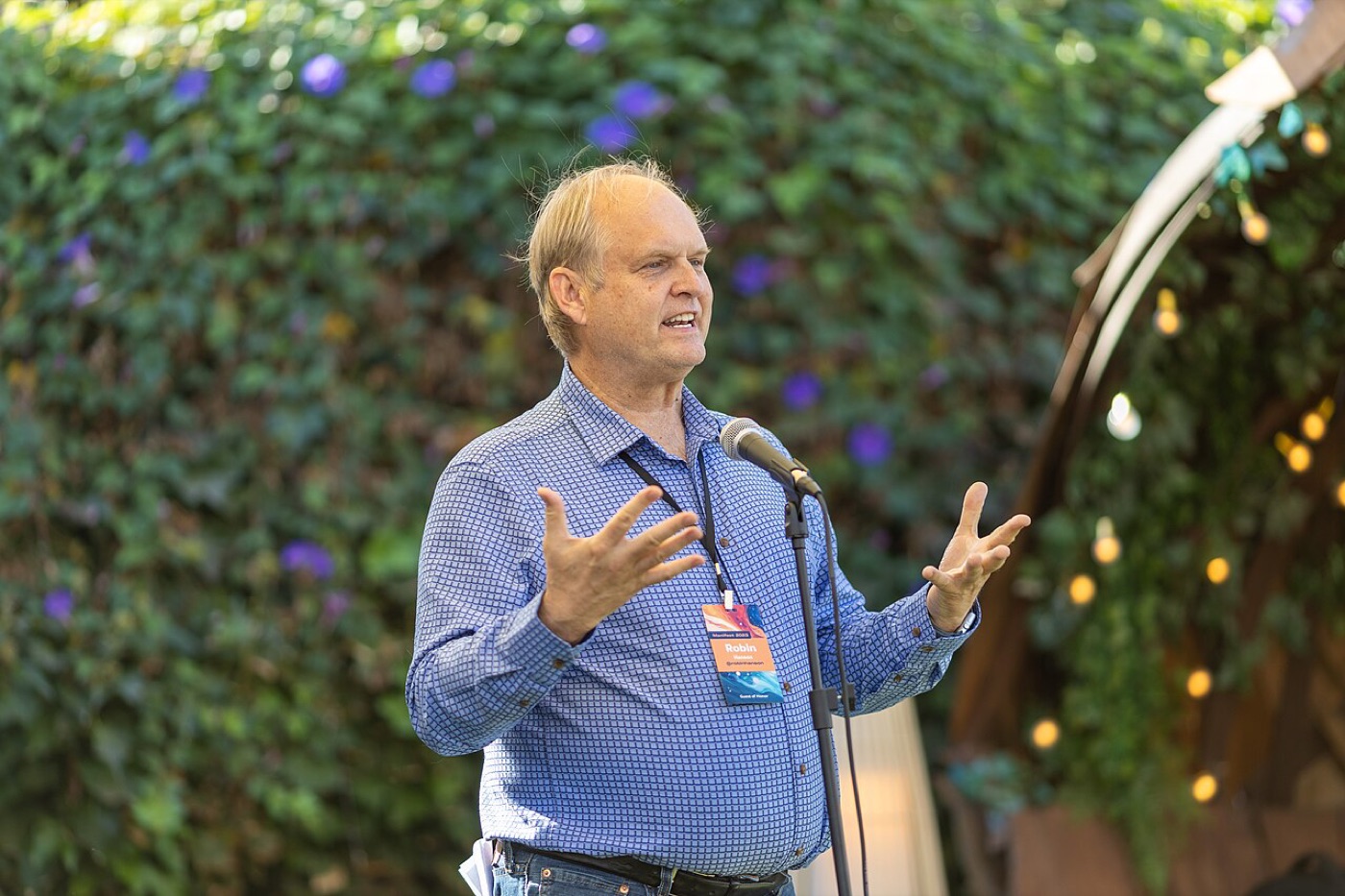
Man in a blue checked shirt and conference lanyard gesturing beside a microphone in front of an ivy wall
Robin Hanson speaking at the Manifest conference, 23 September 2023. Later photograph than his 1998 essay. Nikita Sokolsky · CC BY-SA 4.0

Theory & argumentOriginal explanatory essay · 15 September 1998

Hanson · A barrier between matter and lasting expansion

Hanson’s 1998 essay places a probability barrier between lifeless matter and lasting expansion, asking how much difficulty humanity has already passed.

Hanson’s 1998 essay locates a probability barrier somewhere between lifeless matter and conspicuous, lasting cosmic expansion. It could involve life’s origin, complex cells, intelligence or what follows our present stage; the central question is how much difficulty humanity has already passed. His inference depends on expectations about expansion, survival and visible engineering; it is not a measured extinction rate. He also considers alternatives involving difficult space travel, hidden activity and different physical possibilities. The filter need not be a single event, and the essay does not identify one proven cause.

Source details & what was checked
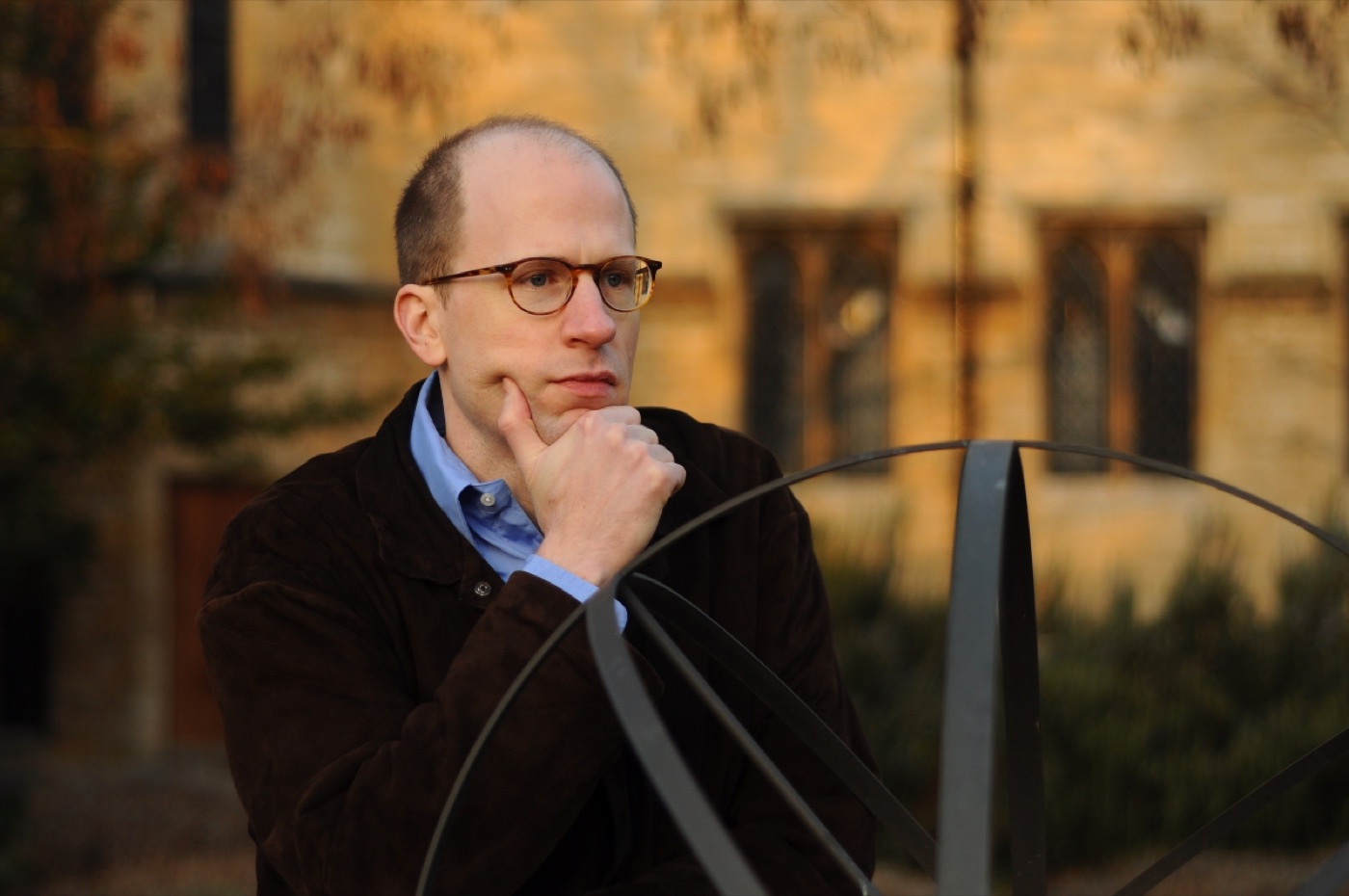
Man in tortoiseshell glasses resting his chin on his hand beside curved metal rings in a sunlit Oxford courtyard
Nick Bostrom thinking in Oxford, Future of Humanity Institute photograph, 23 October 2014. Later photograph than his 2008 essay. Future of Humanity Institute · CC BY-SA 4.0

Theory & argumentOriginal philosophical argument · May–June 2008

Bostrom · Why independent life could be unsettling

Bostrom’s 2008 argument that independent life nearby could mean easier early transitions, leaving more of the filter’s difficulty ahead of us.

Bostrom’s 2008 argument turns the search for life into a question about our prospects. If life independently arose nearby, early biological transitions could be easier than assumed, leaving more of the explanatory difficulty later. Complex independent life would constrain more past steps than microbes would. This is conditional reasoning within the filter framework, not a claim that any extraterrestrial discovery automatically means doom. Shared ancestry or panspermia changes the inference. A filter can also be distributed across our past and future, while an early filter would not remove ordinary future risks.

Source details & what was checked
Back to sections ↑

AI as one proposed cosmic bottleneck

Garrett’s 2024 paper proposes artificial superintelligence as one possible Great Filter, offered as a hypothesis rather than a finding.

Editorial illustration: a circuit chip with pins
Editorial illustration · Z13 visual study

Theory & argumentAI-as-filter hypothesis · 2024

Garrett · Superintelligence before a multiplanetary civilisation

Garrett’s 2024 hypothesis that AI, culminating in superintelligence, could be a Great Filter: a proposed scenario, not a measured lifespan or countdown.

Garrett’s 2024 paper explicitly proposes AI, culminating in artificial superintelligence, as a possible Great Filter. The abstract places the danger before a civilisation achieves stable multiplanetary existence and explores technical lifetimes shorter than 200 years. That number belongs to a proposed scenario, not a measured lifespan for alien societies or a countdown for humanity. The paper links the proposal to SETI non-detections and calls for AI governance and space development. Its hypothesis connects advanced computation with cosmic rarity without claiming quantum computing is required or UAP are its evidence.

Source details & what was checked
Back to sections ↑

Uncertainty can weaken the apparent paradox

Sandberg, Drexler and Ord argue that parameter uncertainty can weaken the apparent paradox; the closing entry asks what a quiet sky and unidentified reports establish.

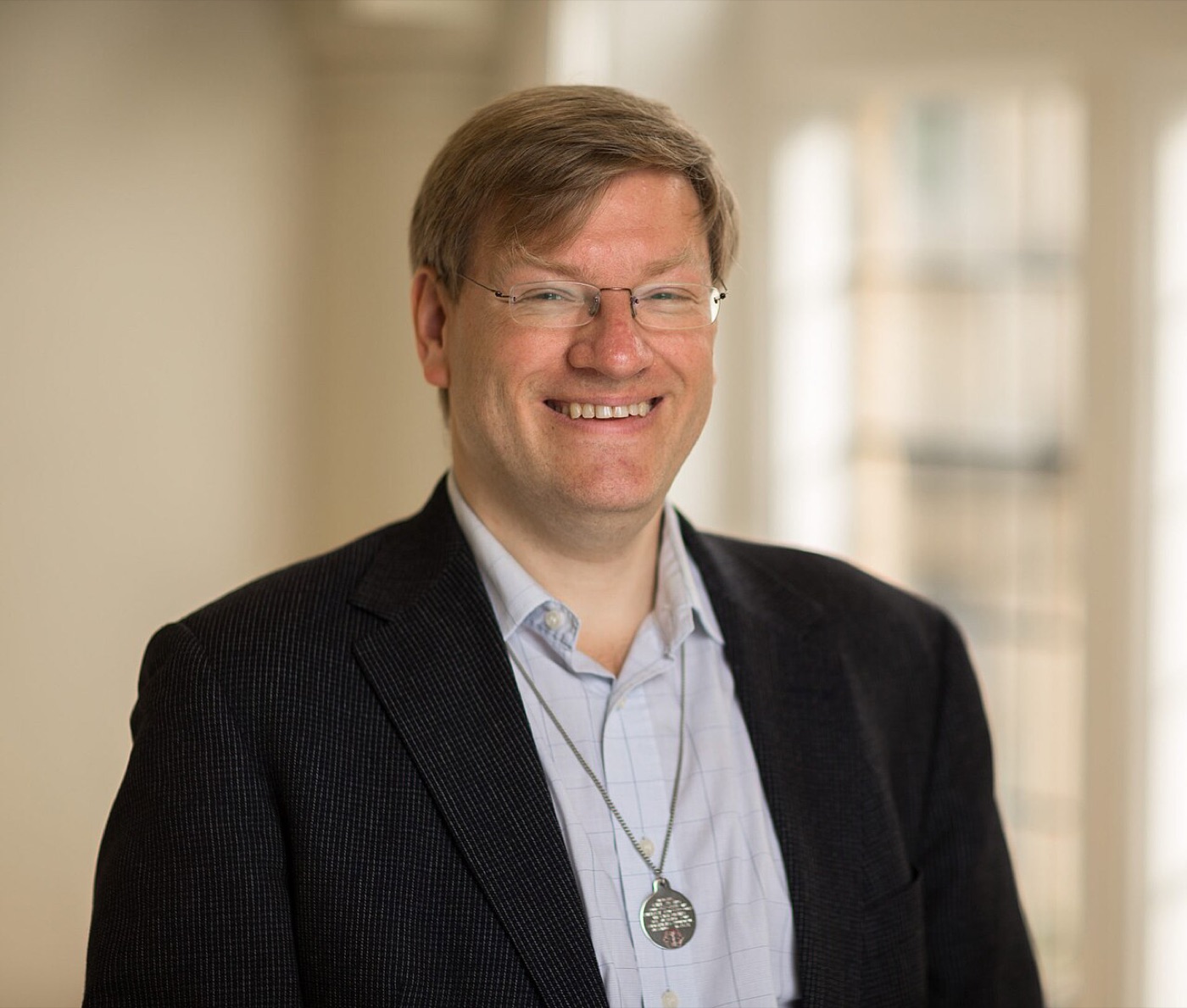
Smiling man with glasses and a dark blazer, wearing a medal on a chain, in a bright room
Anders Sandberg, Future of Humanity Institute press portrait (file dated 21 October 2016). Fisher Studios (file metadata); published by the Future of Humanity Institute · CC BY 4.0

Theory & argumentProbabilistic counterargument · 6 June 2018

Sandberg, Drexler and Ord · The unknowns span orders of magnitude

A 2018 probability model by Sandberg, Drexler and Ord: wide Drake-equation uncertainty leaves a substantial modelled chance of no other intelligent life.

Their 2018 paper argues that familiar Drake-equation calculations can obscure enormous uncertainty in the underlying parameters. Representing uncertain chemical and genetic transitions as distributions yields a substantial modelled possibility of no other intelligent life in the observable universe. On this account, non-detection need not require a universal catastrophe that destroys technological societies. This is a probability-model argument, not an observation proving solitude: the result depends on modelling choices and uncertainty estimates, and neither demonstrates an empty galaxy nor establishes that future existential risks are small.

Source details & what was checked
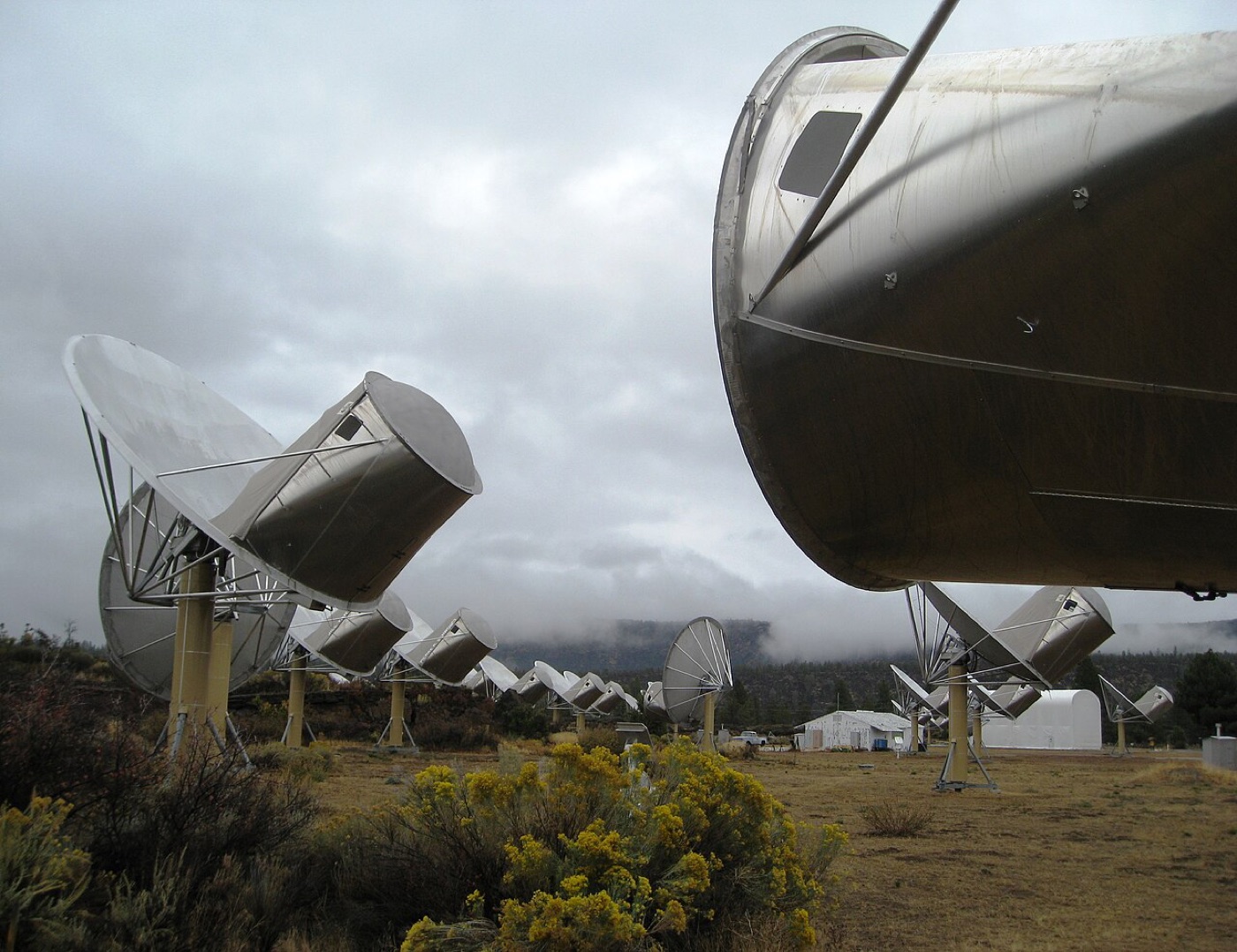
Rows of tilted radio dishes with silvery feed horns under a cloudy sky among sagebrush
Antennas of the Allen Telescope Array, built by the SETI Institute and the University of California, Berkeley's Radio Astronomy Laboratory for astronomy and a search for extraterrestrial intelligence; photograph of 23 October 2010. An instrument photograph, not evidence of any signal. brewbooks (Flickr) · CC BY-SA 2.0

Theory & argumentOriginal explanatory essay · 15 September 1998

What a quiet sky and unidentified reports can establish

Unidentified reports do not establish an extraterrestrial civilisation, and a quiet sky does not prove life is absent: two limits on over-reading.

The Great Filter debate compares broad expectations about life and detectable expansion with limited observations. Unidentified reports do not by themselves establish the extraterrestrial civilisation needed to change those premises; conversely, absence of a confirmed civilisation does not prove absence of life. Bostrom explicitly recognises hidden-civilisation alternatives before setting them aside, while Hanson examines versions of the zoo hypothesis. These are competing explanatory assumptions, not confirmations that Earth is being monitored. A verified extraterrestrial discovery would require revisiting the arguments using what was actually found.

Keep galaxy, observable universe, microbial life, independent origins and visible technological expansion distinct.

Source details & what was checked
Back to sections ↑