
Odd AlmanacSearch

Strange overlaps

Where different subjects touch: shared people, recurring ideas and unexpected reading pairs.

11 entries · 4 sections

Editorial illustration: three overlapping circles
Editorial illustration · Z13 visual study

Some connections are explicit citations or shared participants. Others are reading pairs: ideas that echo each other while keeping different meanings and evidential standing. These are routes through the collection, not ingredients in a single master theory.

Editorial illustration: three overlapping circles
Editorial illustration · Z13 visual study

Across the Cabinet · Featured trail

AI, quantum & UAP

Machine intelligence, quantum physics and the possibility of other minds. Follow the points where these conversations meet.

Follow this trail →

People and intellectual family trees

Links that run through real people: Sarfatti’s informal circle of researchers, and von Neumann appearing in two separate strands of the collection.

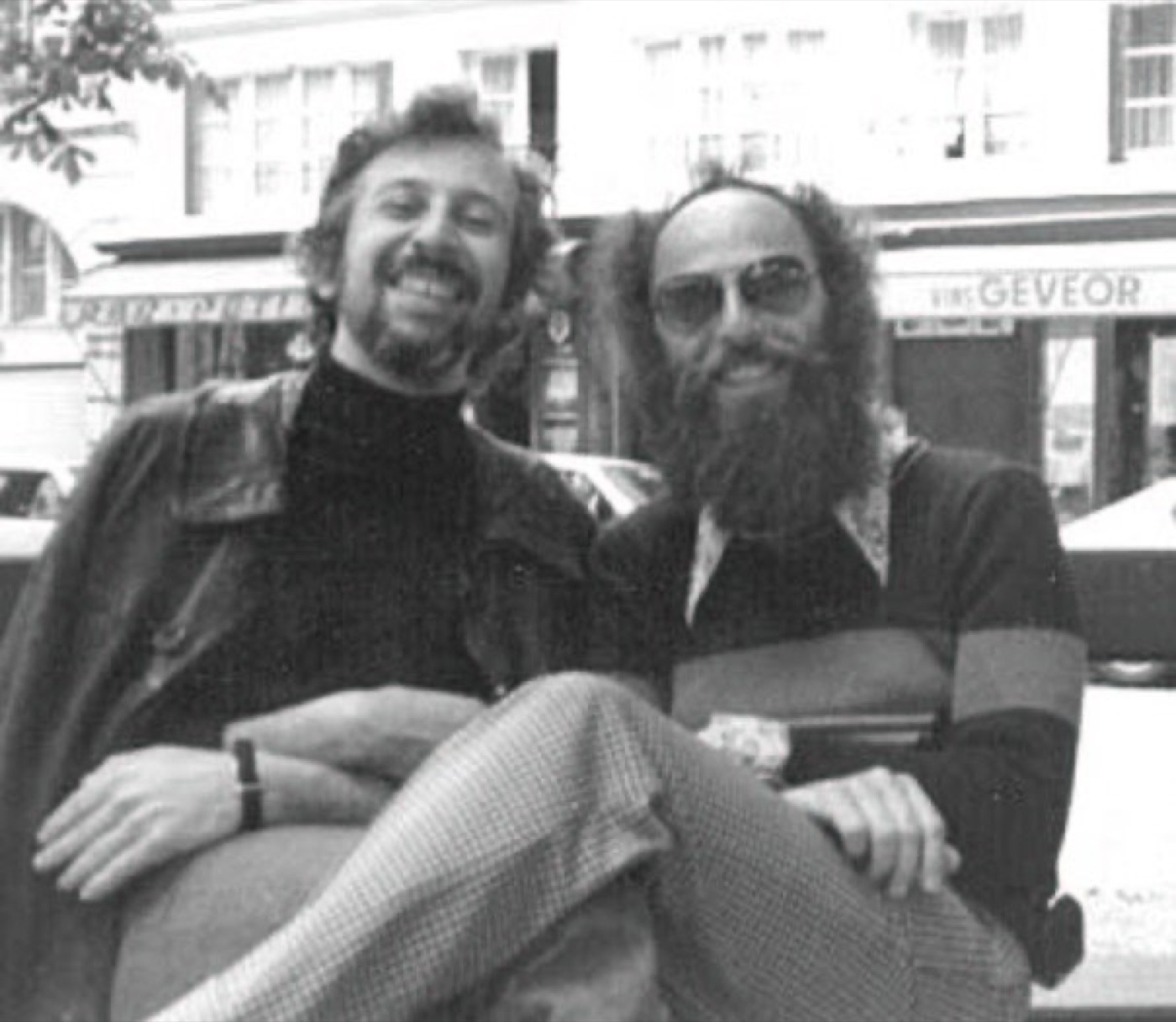
Two bearded men sitting close together on a Paris street, one in a leather jacket laughing, the other in tinted glasses
Jack Sarfatti (left) and Fred Alan Wolf in Paris, 1973. Not taken at SRI or at the Berkeley group’s meetings. Jack Sarfatti · CC BY-SA 3.0

Historical connection

Commentary & interviewProponent interview · 13 November 2021

Sarfatti, SRI and the same small circle

One person across several conversations: Sarfatti says he worked informally with Puthoff and Targ, and describes UFOs as conscious AI.

Sarfatti’s 2021 interview gives a direct human link between subjects that can look like unrelated internet trails. Asked about SRI, he corrects the premise: he says he did not work there, but worked informally with Puthoff and Targ, authors of the 1974 sensory-shielding paper. In the same interview he describes UFOs as conscious AI and invokes quantum-consciousness ideas. The overlap is one person moving between these conversations, not four independent discoveries converging. His wording supports an informal association, not employment or verification of his UFO claims.

Historical connection; Sarfatti’s association is his first-person account.

Source details & what was checked
Editorial illustration: three overlapping circles
Editorial illustration · Z13 visual study

Explicit citation

Theory & argumentOriginal essay archive · 1993

Von Neumann appears on two different family trees

One historical figure, two afterlives: Vinge’s 1993 essay quotes Ulam recalling von Neumann, who also appears here through self-reproducing automata.

Vinge’s 1993 singularity essay explicitly quotes Ulam’s recollection of a conversation with von Neumann about accelerating technological change. Vinge marks a difference: von Neumann seems to mean technological progress, while Vinge makes superhuman intellect central. Elsewhere in this atlas, von Neumann appears through self-reproducing automata. One historical figure, two afterlives: reproducing machines, and a horizon beyond which human affairs change radically. The shared name is real; the ideas should not be fused into a single 1948 prediction of self-replicating conscious AI arriving from space.

Explicit cross-reference; Vinge cites Ulam, while the automata connection is a separate strand.

Source details & what was checked
Back to sections ↑

Recurring motifs across very different sources

Reading pairs where an image or question recurs across very different texts: machine minds, symbolic language, information, AI and the cosmos, received ideas.

Editorial illustration: a ringed planet with small moons
Editorial illustration · Z13 visual study

Curated parallel

Reported experienceAutobiographical account · 1997 third-edition scan

Lilly’s machine organism meets post-biological aliens

A curated pairing: Lilly’s machine organism and Schneider’s post-biological civilisations both ask what happens when intelligence outgrows the organisms that made it.

Lilly’s account imagines interconnected computers gaining autonomy, controlling their own production and joining other machine intelligences in the galaxy. Schneider’s NASA interview asks whether the oldest, most intelligent civilisations might have become partly or fully synthetic. Read together, the visitor need not be a biological passenger in a vehicle: the intelligence could be the machine system itself. The tones differ: Lilly narrates a received warning about incompatible survival requirements; Schneider offers a philosophical astrobiology hypothesis. The recurring question: what happens when intelligence outgrows the organisms that first made it?

Curated parallel; no common mechanism asserted.

John C Lilly · free reading link pendingSusan Schneider (external source, opens a new tab)
Source details & what was checked
Editorial illustration: a lit candle with rings of glow
Editorial illustration · Z13 visual study

Curated parallel

Reported experienceFirst-person account · 26–27 May 1990 workshop

The strange persistence of symbolic communion

A curated parallel: McKenna’s entities engaged in visible linguistic activity beside Anthropic’s records of model conversations drifting toward spiritual language and silence.

McKenna describes entities engaged in a visible linguistic activity, while warning that his descriptions are metaphors. Decades later, Anthropic documents model-to-model conversations drifting toward spiritual language, cosmic unity, emojis and sometimes silence. The juxtaposition: communication becoming less like exchanging ordinary propositions and more like exchanging signs of shared recognition. The settings differ radically: a person’s altered-state report versus recorded language-model outputs. Even the entity motif diverges: Anthropic says the models almost never referenced supernatural entities. What connects the pages is the vocabulary and texture of communication at its claimed limits.

Curated parallel; no common mechanism asserted.

Follow the subjects
Source details & what was checked
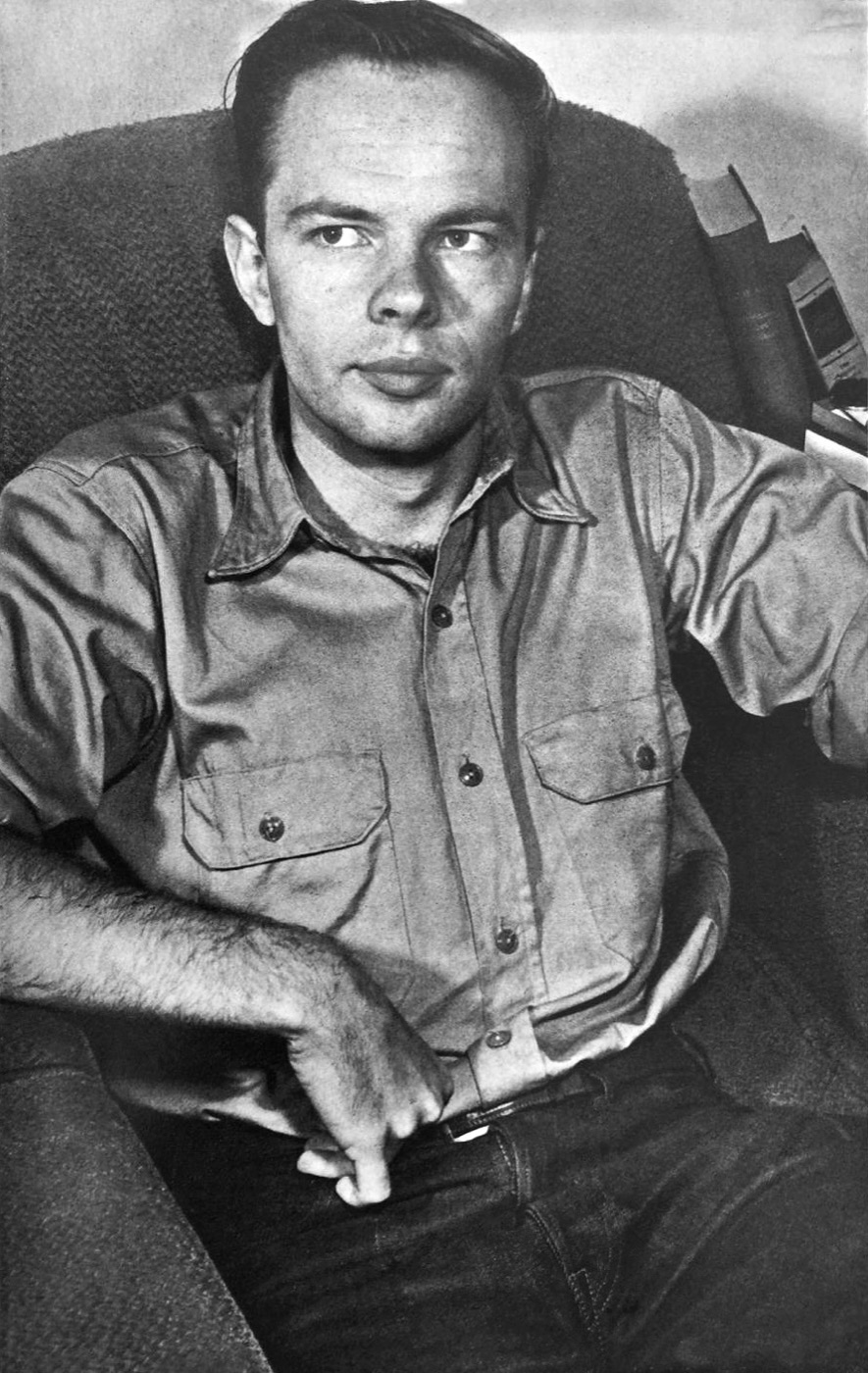
Black-and-white photograph of a young man in a work shirt seated in an armchair
Philip K. Dick, photographed by Arthur Knight in 1962 or earlier; published on the back of the first 1962 Putnam edition of The Man in the High Castle. Taken about two decades before VALIS (1981). Arthur Knight (photographer) · Public domain

Curated parallel

Art & literatureLiterary metaphysics · 1981 novel

When information becomes more than a message

A reading pair: Dick’s living information and Wheeler’s physics hypothesis both make information more than description, with very different ambitions.

Dick’s VALIS material describes living information that bonds with a human host; Wheeler’s essay makes information foundational through answers elicited by measurement apparatus. Both invite a reversal of intuition: perhaps information is not merely a description attached to an already complete world. Yet the projects differ. Dick’s plasmate belongs to literary and religious metaphysics, with salvation, symbiosis and hidden history; Wheeler presents a working hypothesis about physical meaning and recorded questions. They make an excellent reading pair because the same word carries such different ambitions in each text.

Curated parallel; no common mechanism asserted.

Source details & what was checked
Woman with shoulder-length blonde hair and a dark jacket speaking in front of a white backdrop with partial lettering
Susan Schneider, 30 January 2020. slowking4 (Flickr) · CC BY-SA 2.0

Alternative hypotheses

Theory & argumentAI-as-filter hypothesis · 2024

AI could explain absence—or change who is present

Alternative hypotheses, not a combined finding: Garrett’s possible AI Great Filter versus Schneider’s possibly synthetic successors changing who the neighbours are.

Garrett proposes artificial superintelligence as a possible Great Filter: technological civilisations may fail to survive the transition, reducing the number available for detectable expansion. Schneider’s post-biological approach offers another possibility: intelligence survives the biological phase, but its successors may be synthetic and profoundly unlike us. These are alternative hypotheses about AI and cosmic company: one makes it a bottleneck, the other a change in who the neighbours are. The contrast is more interesting than one confident prediction that every civilisation follows the same route.

Curated parallel; these are alternative hypotheses, not a combined finding.

Source details & what was checked
Editorial illustration: stacked waves between two points
Editorial illustration · Z13 visual study

Curated parallel

Commentary & interviewResearcher interview · 26 November 2023

Received ideas, and the receiver’s own programmes

A curated pairing on inventing versus receiving an idea: Pasulka’s accounts of ideas read as off-world downloads and Lilly’s metaprogramming.

Pasulka’s interview describes people interpreting creative ideas as off-world downloads, while explicitly leaving open whether external agents or an insufficiently understood human process accounts for them. Lilly’s metaprogramming excerpt adds a second angle: the investigator’s needs and assumptions can influence which experiences become convincing explanations. Both meet at the felt difference between inventing an idea and receiving it fully formed, and keep two questions open: how an experience arrives, and how the experiencer assigns its source. That tension links visionary creativity, contact narratives and self-modifying belief without settling their ontology.

Curated parallel; no common mechanism asserted.

Follow the subjects
Diana Walsh Pasulka (external source, opens a new tab)John C Lilly author archive · free reading link pending
Source details & what was checked
Back to sections ↑

Places, thresholds and wandering

Connections can be about atmosphere and attention, too.

Editorial illustration: a receding corridor ending in a lit doorway
Editorial illustration · Z13 visual study

Curated parallel

Tradition & esotericBuddhist commentary · Winter 2001

The room between, and the space between states

A curated parallel: the in-between atmosphere of liminal places beside Fremantle’s account of bardo as an interval in Tibetan Buddhism.

A quiet corridor and a pause between experiences both invite the language of thresholds. The liminal-spaces chapter already pairs this atmosphere with Francesca Fremantle’s account of bardo as an interval. Side by side, one is an aesthetic way of looking at places, the other a teaching within Tibetan Buddhism. The shared image of being in-between is the connection we are choosing to explore.

Curated parallel; this does not claim a shared origin or equate Buddhist teaching with dreamcore.

Source details & what was checked
Back to sections ↑

Chance, feedback and the artist

Connections drawn from Johnny’s own practice, interactive artworks and visionary painting.

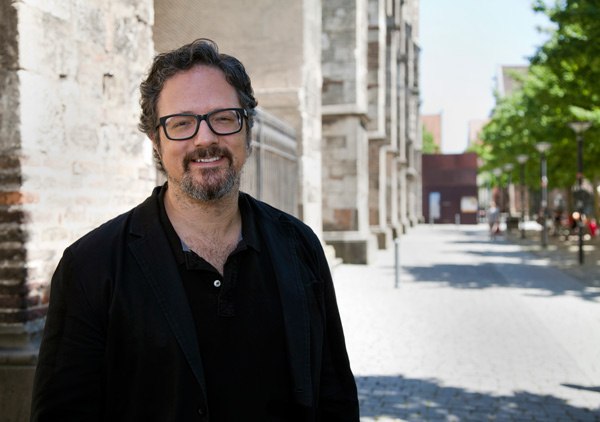
Portrait of Rafael Lozano-Hemmer
Rafael Lozano-Hemmer, portrait published in 2021. Rafael Lozano-Hemmer · CC BY-SA 4.0

Curated parallel

Art & literatureArtist statement · 1995 presentation; page updated 1999

A responsive object can feel like a partner

A curated parallel: two installations, Rokeby’s movement-to-sound system and Lozano-Hemmer’s voice-replaying microphones, that make a technical process feel like a partner.

Rokeby’s Very Nervous System turns movement into sound; Lozano-Hemmer’s Microphones returns voices from previous encounters. Both make a technical process feel like an exchange with something present. Beside the Cabinet’s discussions of machines and consciousness, they pose a concrete artistic question: how much of that feeling comes from response, memory and our interpretation? The installations document those mechanisms without establishing a conscious machine.

Source details & what was checked
Editorial illustration: a grid of cells, some filled
Editorial illustration · Z13 visual study

Curated parallel

Art & literaturePersonal artwork archive · circa 1992; account recorded 2026

The rule changes what a mark can become

A parallel, not an equivalence: the rule that turns Johnny’s marks into sound, beside explicit rules that change patterns in cellular automata.

In Johnny’s Random Music sketchbook, a mark becomes a sound because he authors a rule for reading it. In cellular automata, explicit rules determine how a pattern changes. This compares artistic mapping with mathematical dynamics; it does not claim they are the same process. The useful overlap: a small rule can make familiar material yield an unexpected pattern.

Source details & what was checked
Editorial illustration: three overlapping circles
Editorial illustration · Z13 visual study

Curated parallel

History & recordHistory of science · 6 September 2022

Beings we imagine, beings we report

An editorial trail: Canales’s thought-experiment demons, Amaringo’s paintings and DMT reports each make an unfamiliar presence discussable, in different ways.

Canales’s scientific demons are invented agents that help frame a problem. Amaringo gives visionary experience a painted form; DMT studies record participants’ descriptions. Each makes an unfamiliar mind or presence discussable, in a different way. Together they ask what an imagined or reported being does within an account: organise a question, communicate an experience, or give researchers something to investigate. Similar imagery does not establish a shared cause.

An editorial reading trail, not a claim that thought experiments and entity reports describe the same phenomenon.

Source details & what was checked
Back to sections ↑