Odd AlmanacSearch

Art at the edge of perception

Artworks and imagined worlds where perception, memory and invention meet.

6 entries · 3 sections

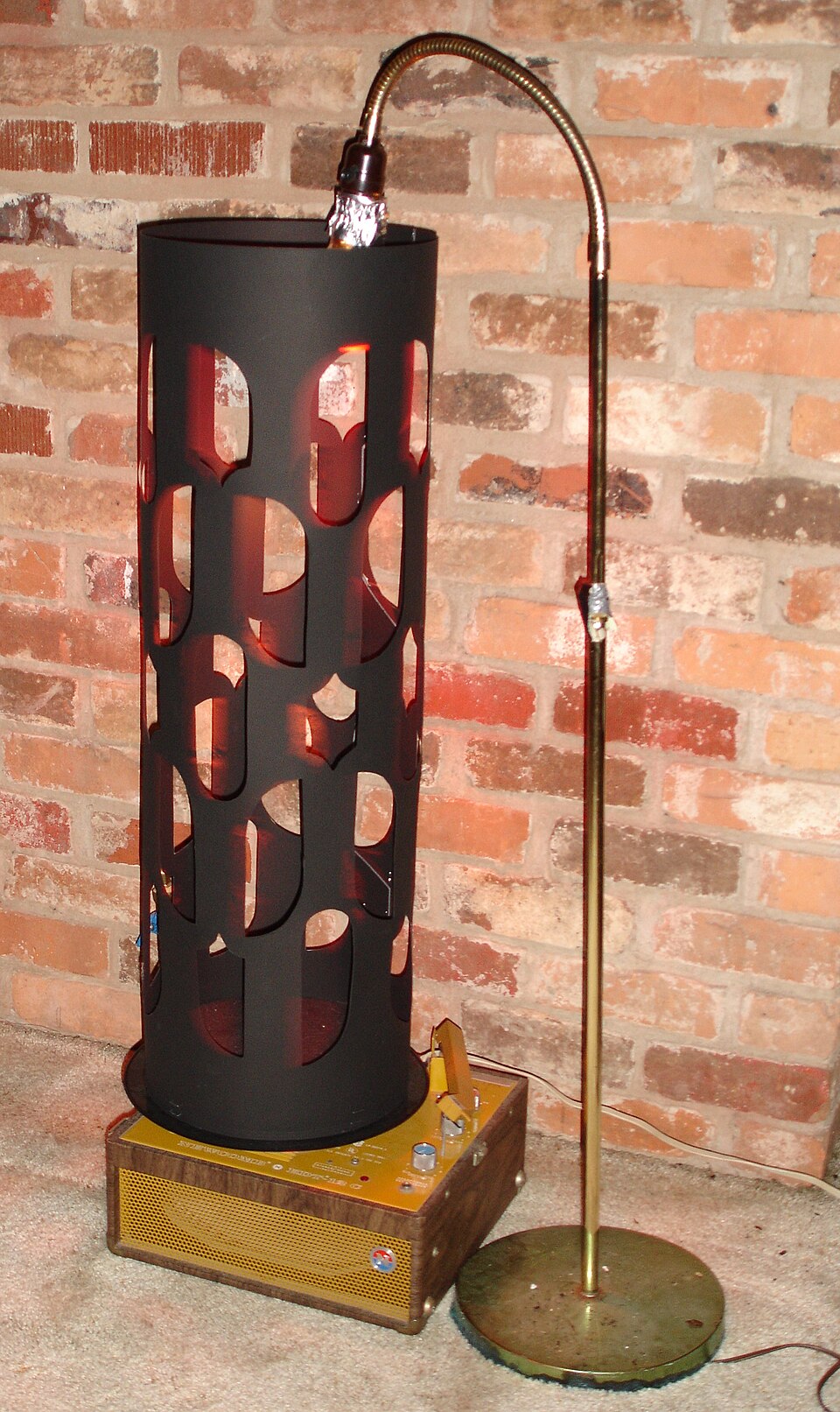
A perforated cylindrical Dreamachine standing on a turntable
A Dreamachine photographed by Steve Burnett in September 2005, stationary. This is a later example, not the original 1960–61 object. Steve Burnett · Public domain

Machines that answer, images experienced with closed eyes, and worlds given shape on paper. This selection brings Johnny’s art research together with leads from the Hancock–Michels conversation. Artistic accounts and imagined agents keep their own context alongside scientific research.

Machines that change the encounter

Original artworks and their makers’ accounts, with gentle strangeness in the foreground.

A perforated cylindrical Dreamachine standing on a turntable
A Dreamachine photographed by Steve Burnett in September 2005, stationary. This is a later example, not the original 1960–61 object. Steve Burnett · Public domain

Art & literatureMuseum artwork documentation · 1960–1961; collection edition 2012

Dreamachine · Images with the eyes closed

Dreamachine, Gysin and Sommerville’s light artwork from around 1960–61, seen with eyes closed so the images arise in the viewer’s perception.

Brion Gysin and Ian Sommerville developed Dreamachine around 1960–61: a light-based artwork meant to be experienced with the eyes closed, so its images arise in the viewer’s perception rather than on a screen. William S. Burroughs belongs to its experimental literary circle; the credited co-creators are Gysin and Sommerville. The overlap here is between an engineered object, artistic intention and a private visual experience.

The photograph shows a later example from 2005. The original artwork uses flickering light; this page shows a still photograph. No therapeutic or paranormal claim is made.

Source details & what was checked
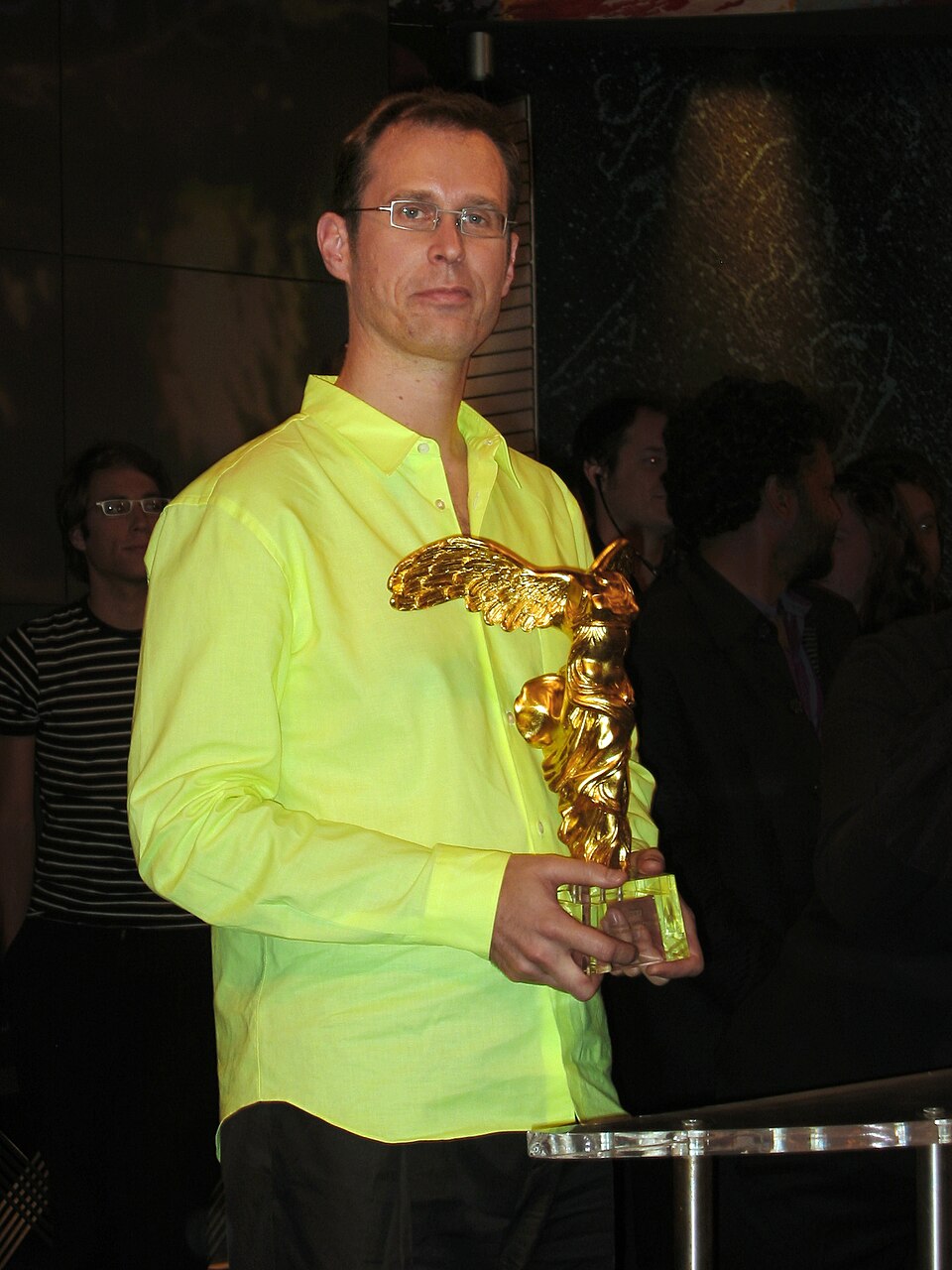
David Rokeby holding the winged Golden Nica award
David Rokeby with his Golden Nica at Ars Electronica, 2002. Davidrokeby / Wikimedia Commons · CC BY-SA 4.0

Art & literatureArtist statement · 1995 presentation; page updated 1999

Very Nervous System · The room answers your movement

Rokeby’s interactive artwork turns movement into music, and his 1995 account describes feedback that feels meaningful but is not easy to control.

David Rokeby uses cameras, processing and sound to turn bodily movement into a musical response: you move, hear what happens, and move again. In his 1995 account, Rokeby describes a system that can feel meaningful without being easy to control completely. It makes feedback felt through the body, a useful artistic companion to questions about agency.

An interactive artwork and an artist’s account, not a demonstration of machine consciousness.

Source details & what was checked
Portrait of Rafael Lozano-Hemmer
Rafael Lozano-Hemmer, portrait published in 2021. Rafael Lozano-Hemmer · CC BY-SA 4.0

Art & literatureArtist project documentation · 2008

Microphones · A voice left by someone else

Lozano-Hemmer’s 2008 microphones that may answer with a previous visitor’s recorded voice; the mechanism is stored sound, yet it seems to remember.

Rafael Lozano-Hemmer’s modified microphones can answer with a recording left by an earlier visitor. Sometimes the speaker hears their own newly recorded voice instead. The object seems to remember: another person’s contribution returns in a later encounter. The mechanism is stored sound and selection, giving an ordinary microphone a gently uncanny sense of history.

2008 installation; programming credited to Gideon May. The linked page provides free project documentation. Visitor recordings and videos are outside this text-based review.

Source details & what was checked
Back to sections ↑

Worlds painted and imagined

Two leads from Johnny’s Hancock–Michels reference, followed back to an artist catalogue and a free publisher excerpt.

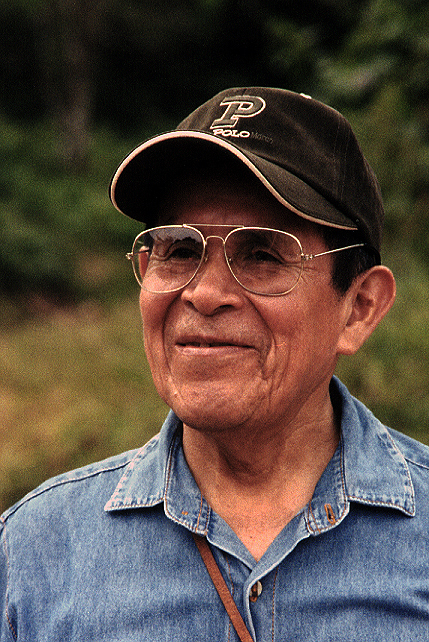
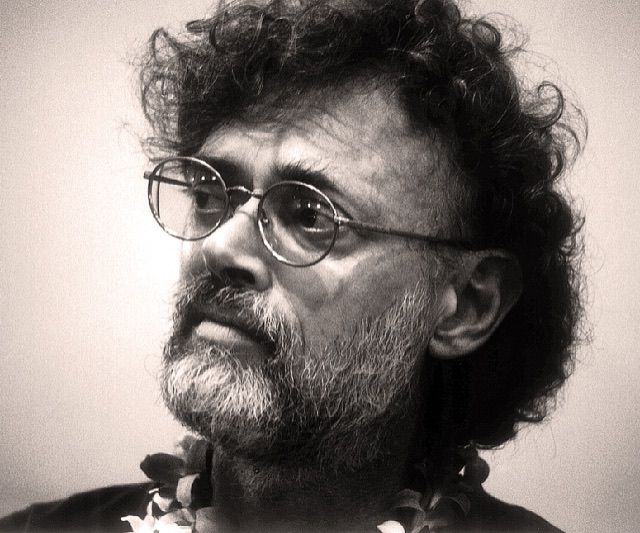
Portrait of Pablo Amaringo wearing glasses and a dark cap
Pablo Amaringo in the Brazilian Amazon, 10 August 2002. Photograph by Jon Hanna. Jon Hanna · CC BY-SA 3.0

Art & literatureArtist documentation · Undated artist catalogue

Pablo Amaringo · Giving a vision a visible form

Pablo Amaringo’s detailed paintings of Amazonian landscapes and visionary imagery, read as art, not as verification of the worlds they depict.

Amaringo’s detailed paintings bring Amazonian landscapes and visionary imagery into a shared visual space. The ACA catalogue lets us follow his work through named paintings, not as anonymous psychedelic motifs. In the Hancock–Michels conversation, Hancock recalls Amaringo describing painted craft as vehicles between realities. That recollection belongs to Hancock; the paintings are works of art, not independent verification of the worlds they depict.

The interview passage begins around 0:40. The portrait is licensed; use the gallery link to view the paintings in their original context.

ACA Galleries (external source, opens a new tab)Graham Hancock · free reading link pending
Source details & what was checked
  • ACA Galleries · Undated artist catalogue
    Artist biography and artwork listings read on 20 October 2026. Gallery text is freely accessible; no licence to reproduce the paintings is asserted.
    Pablo Amaringo — artist biography and works (external source, opens a new tab) · In the source library
  • Graham Hancock / Jesse Michels Clips · 16 October 2026
    The interview remains a bibliographic reference for attributed claims. Its reading link is withheld from this public edition because the destination includes practical drug advice.
    Graham Hancock: The Alien Mystery is FAR Stranger Than We Think… · free reading link pending · In the source library
Editorial illustration: a wide-open eye
Editorial illustration · Z13 visual study

History & recordHistory of science · 6 September 2022

Jimena Canales · The beings inside a thought experiment

In Bedeviled, Canales follows notional beings such as the demons associated with Descartes, Laplace and Maxwell: imagination at work, not reported experience.

What can an imaginary observer help us think through? In Bedeviled, Canales follows notional beings used to explore scientific problems, including the demons associated with Descartes, Laplace and Maxwell. Her free publisher excerpt offers a different kind of strange encounter: an invented agent with a defined role in an argument. It makes a useful companion to visionary art, while keeping imagination, reported experience and experimental evidence distinct.

Read the free excerpt, not a paywalled full-book link. The illustration is an editorial motif, not a portrait or a scientific diagram.

Source details & what was checked
Back to sections ↑

Images made with light

Botanical specimens recorded directly on a photographic surface.

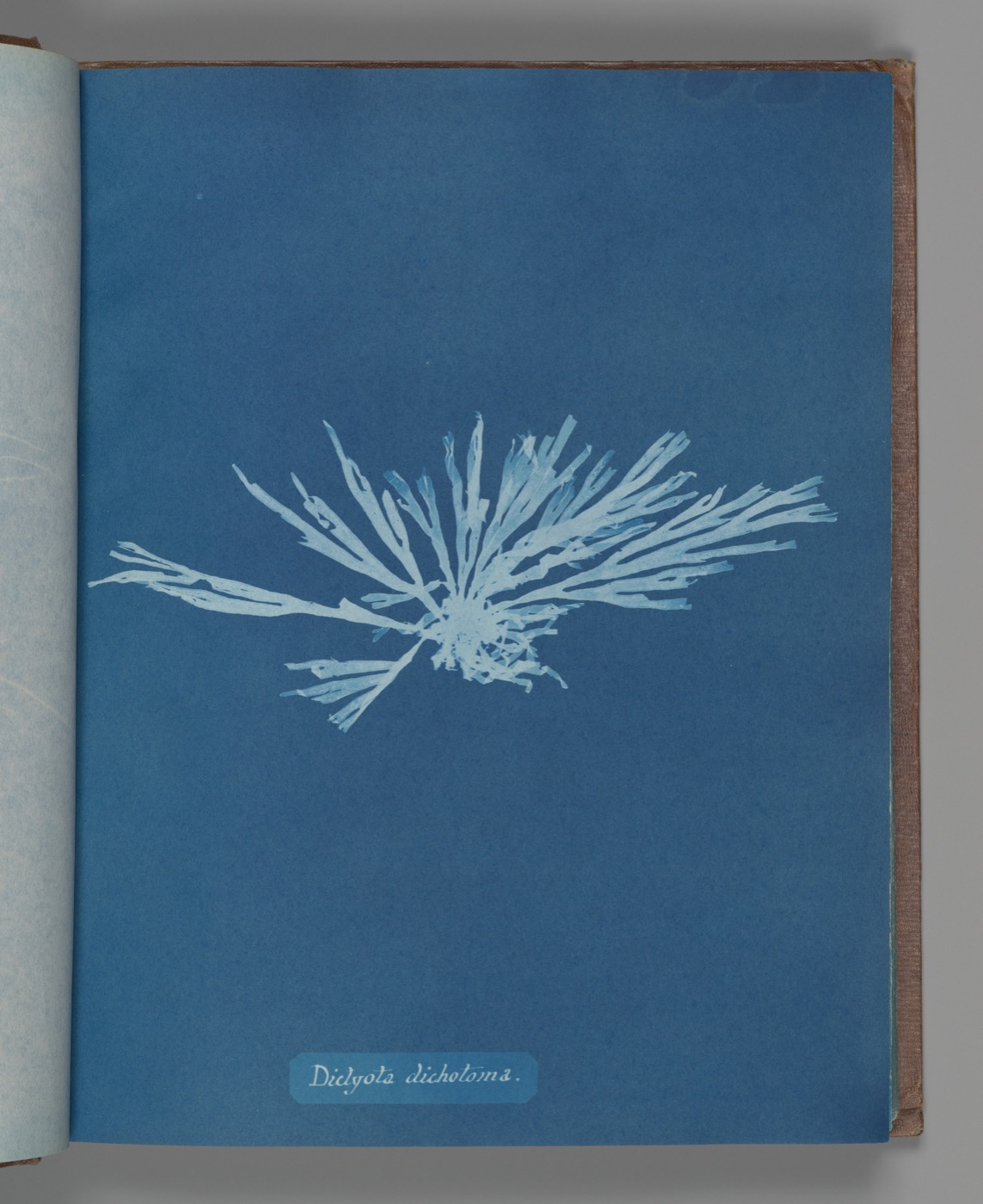
A pale branching seaweed impression across a blue book page, with the handwritten name Dictyota dichotoma underneath.
Anna Atkins, Dictyota dichotoma, ca. 1853. Cyanotype from Photographs of British Algae; The Metropolitan Museum of Art, 2005.100.557 (18). Anna Atkins / The Metropolitan Museum of Art; Gilman Collection, Purchase, The Horace W. Goldsmith Foundation Gift, through Joyce and Robert Menschel, 2005 · CC0 1.0

Art & literatureMuseum collection record · Undated web page

The blue seaweed book made without a camera

Anna Atkins placed algae against light-sensitive paper to make a pioneering book of botanical photographs, one blue print at a time.

Added · Daily discovery

A spray of pale seaweed rests against a deep blue page. Its branches are delicate, but the image was not drawn. Anna Atkins made this kind of botanical photograph by putting the specimen itself against light-sensitive paper. The plant blocked part of the light, leaving a pale impression on a blue ground. A camera was unnecessary.

In 1843, Atkins began issuing Photographs of British Algae: Cyanotype Impressions in parts. The Metropolitan Museum of Art identifies it as the first book both printed and illustrated photographically. Its specimens came from her own collecting and exchanges with other amateur scientists. For their names she followed William Harvey’s 1841 Manual of British Algae, an unillustrated book, and labelled her plates by hand.

The process was new: John Herschel had invented cyanotype in 1842. Atkins used it to record the forms of algae, arranging their strands across individual sheets. The Met explicitly describes a meeting of science and art in these compositions, while noting that artistic expression was not her chief purpose. That connection belongs to the museum’s account of the work; it does not depend on a modern theory about what the images resemble.

The labour behind the blue pages was substantial. The Natural History Museum reports that Atkins made every print herself and that its copies contain 411 plates. Even the book’s text pages and captions reproduce her handwriting photographically. The museum also places her work within a network of scientific education, acquaintances and exchanges, rather than presenting her as an isolated inventor.

Start with the Met’s album record for the project’s history, then its separate record for Dictyota dichotoma, dated around 1853. The reproduced page shows the seaweed spread across the centre, with its name beneath it. The Natural History Museum’s longer account follows Atkins from botanical illustration into photography, explaining how these small, directly printed specimens became an unusually blue book.

Historical work, newly added to the Cabinet. Read the museum accounts below for their full context.

Source details & what was checked
Back to sections ↑