Odd AlmanacSearch

Bell Labs, Roswell & reproducing machines

The postwar dates, the recovered-technology allegation, and three different von Neumann ideas.

7 entries · 2 sections

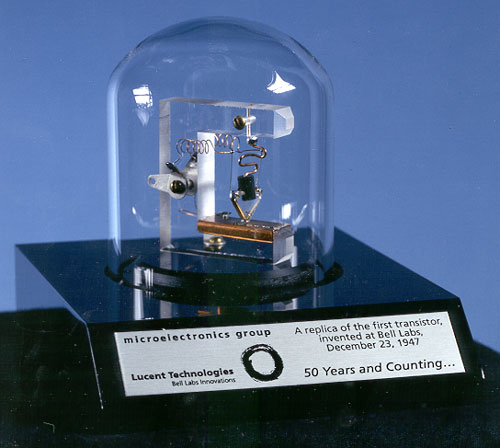
Lucent’s 1997 commemorative replica of the first Bell Labs transistor. This is a replica, not the 1947 device.
Lucent’s 1997 commemorative replica of the first Bell Labs transistor. This is a replica, not the 1947 device. US Government · Public domain

The late 1940s gather several reference points: Roswell, semiconductor electronics, information theory and theoretical self-reproduction. The dates are worth tracing precisely: a shared historical period establishes proximity; it does not identify a hidden common origin.

Bell Labs and the technological timeline

Four entries set documented technical history (the transistor, information theory, the laser) beside Corso’s recovered-technology allegation.

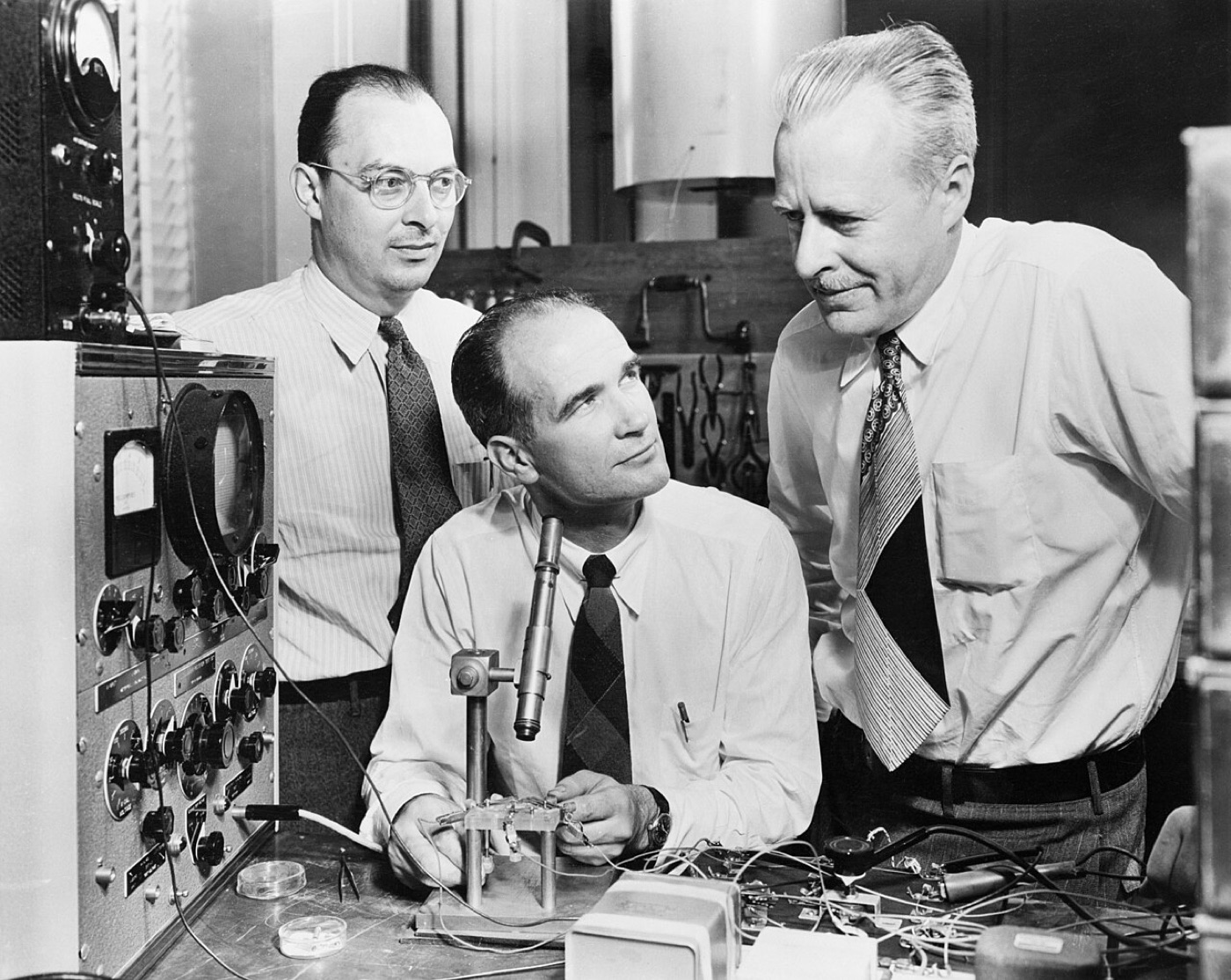
Three men in shirtsleeves around a laboratory bench with electronic test equipment; one sits adjusting a small apparatus
John Bardeen, William Shockley and Walter Brattain (left to right) in a Bell Labs publicity photograph issued around the public announcement of the transistor in June 1948. AT&T / Bell Labs (photographer 'Jack St…', surname not legible on the print) · Public domain

History & recordTechnical history · 1947 event

The transistor had a research history

A museum-documented timeline of the transistor’s path from a 1945 research group to a June 1948 announcement: a firm dated baseline.

Bardeen and Brattain’s point-contact device worked on 16 December 1947, was demonstrated internally on 23 December and was publicly announced on 30 June 1948. Bell Labs organised its solid-state group in 1945; Shockley’s unsuccessful field-effect proposal preceded their work. The museum account links laboratory documentation and primary references.

Source details & what was checked
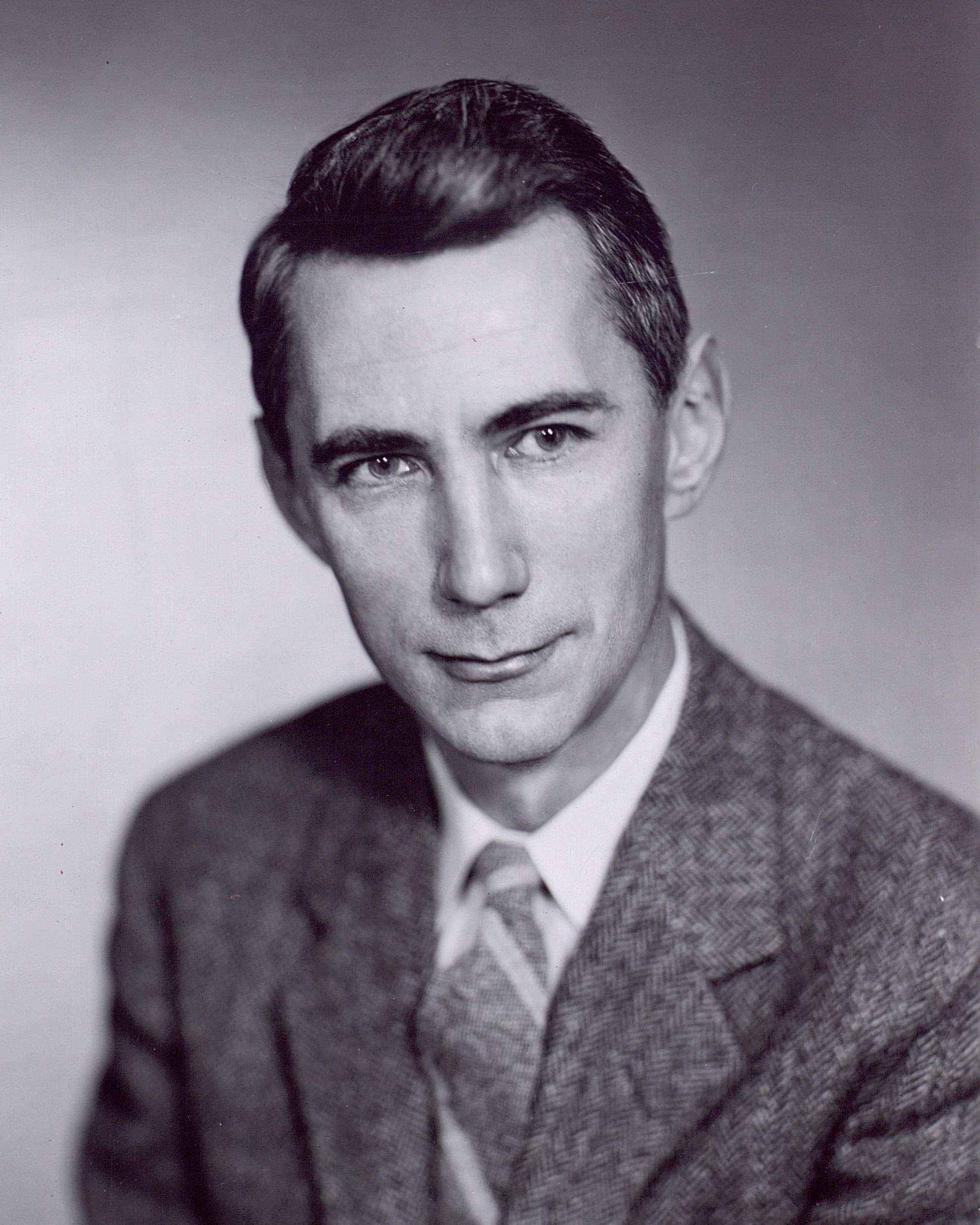
Black-and-white portrait of Claude Shannon
Claude Shannon, from the Tekniska museet photographic collection. Photograph date and photographer are not identified in the record. Tekniska museet; photographer unidentified · CC BY 2.0

Research & assessmentOriginal paper · 1948

Information becomes an engineering subject

The 1948 paper that gave engineers a mathematics of communication and noise: useful background for any story about signals and minds.

Shannon’s 1948 paper provided a mathematical framework for communication, information and noise. Its relevance here is historical and technical: later talk about minds, signals and information takes place in a world reshaped by this work. Shannon’s paper is not a UAP or consciousness claim.

Source details & what was checked
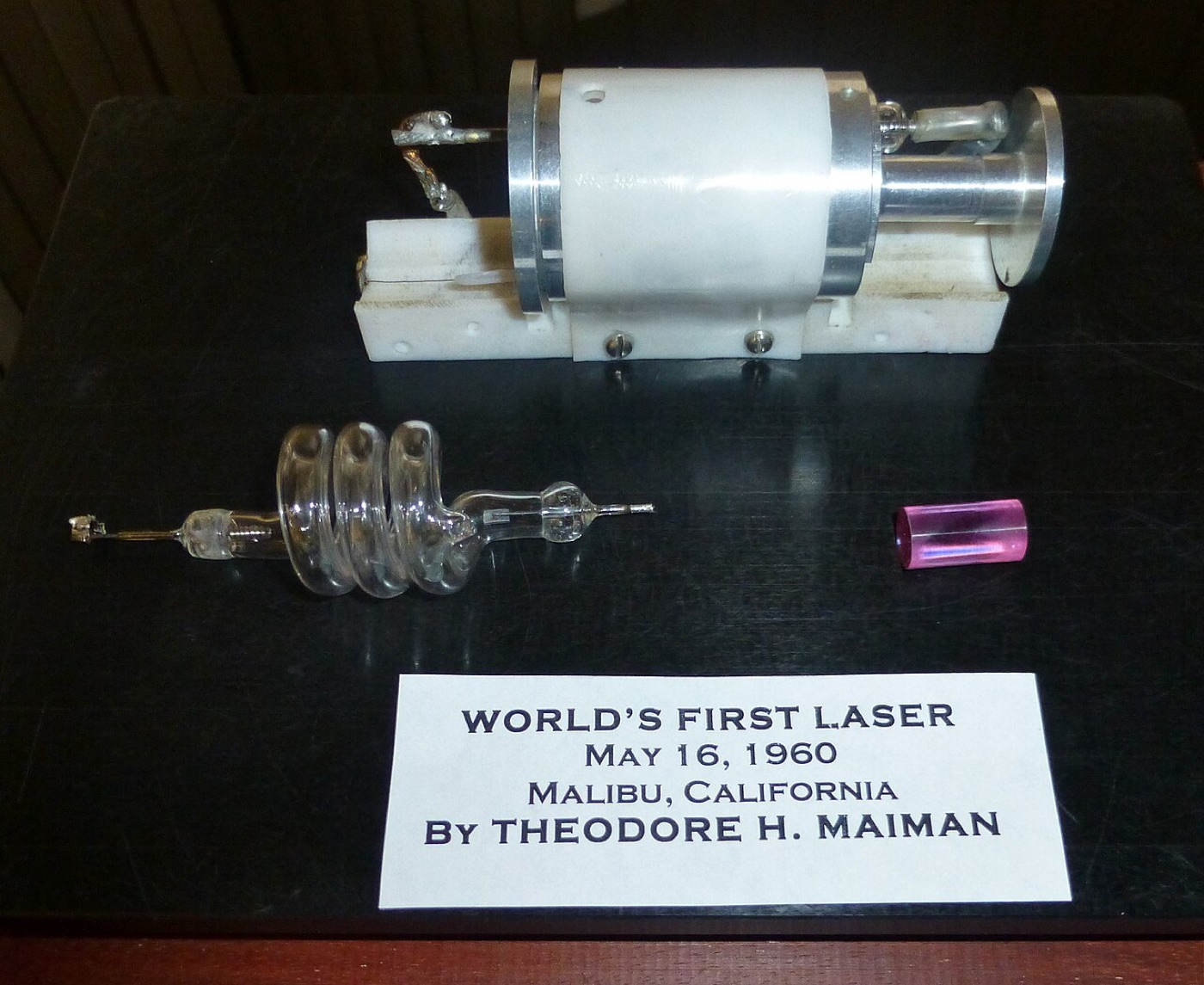
A ruby rod, a spiral glass flashlamp and a white cylindrical housing on a black surface above a printed label reading World's first laser
Parts of Theodore Maiman's first laser, as labelled in the photograph: 'World's first laser, May 16, 1960, Malibu, California, by Theodore H. Maiman'. Later photograph, taken in 2004 by Theodore and Kathleen Maiman; not a 1960 image. Theodore and Kathleen Maiman · CC BY-SA 4.0

History & recordTechnical history · Historical review

Lasers extend a longer sequence

A compact chronology from Einstein’s 1917 stimulated emission to Maiman’s 1960 laser, which was built elsewhere than Bell Labs.

Stimulated emission traces to Einstein’s work in 1917. Maser developments followed in the 1950s; Schawlow and Townes proposed the optical extension in 1958, and Maiman demonstrated the first working laser in 1960. Bell Labs belongs in this sequence, while Maiman’s laser was built elsewhere.

Source details & what was checked
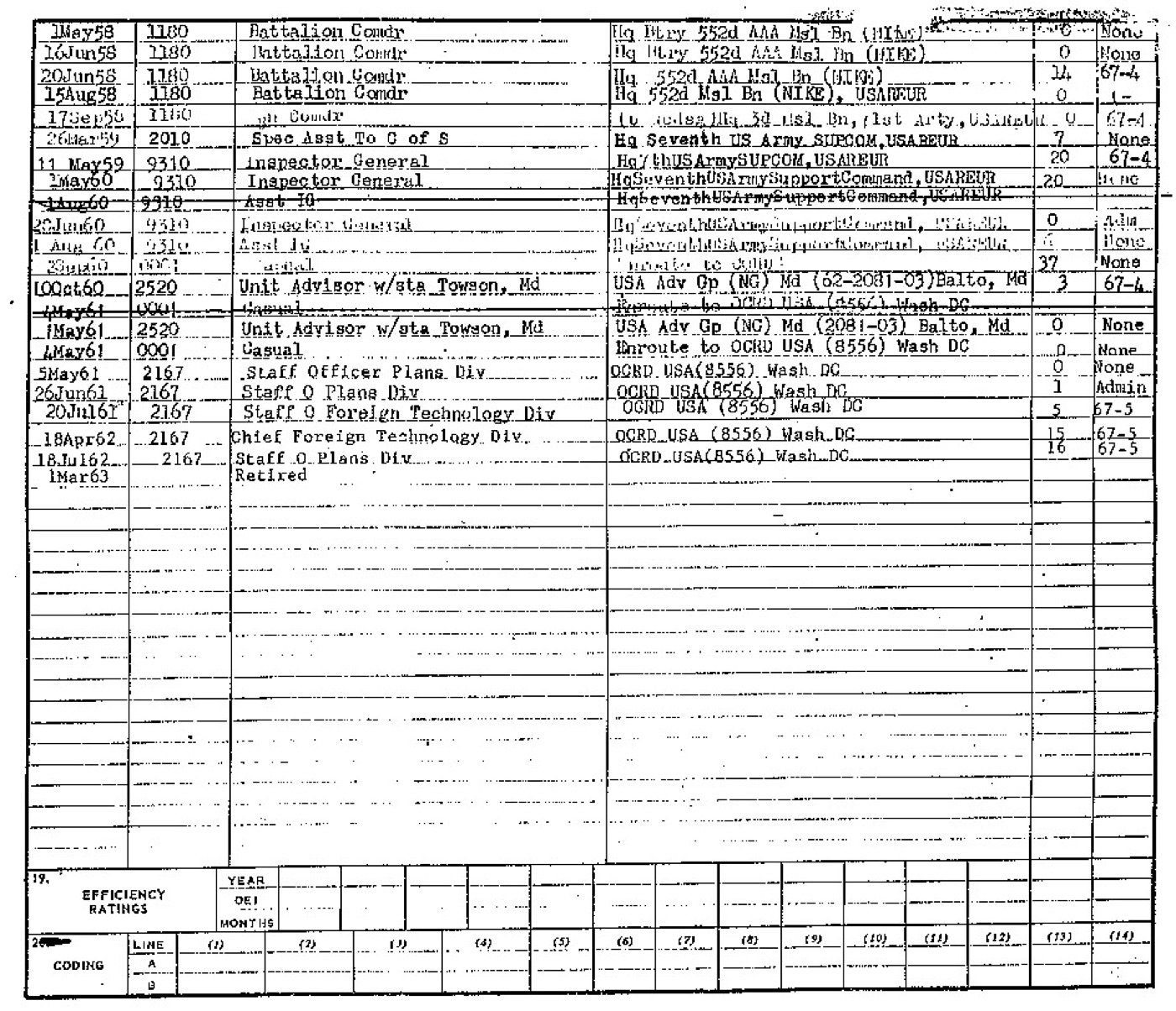
A typed Army form listing dated duty assignments in columns, including lines for Foreign Technology Div
Page 3 of Philip J. Corso's U.S. Army Officer Qualification Record (DA Form 66), Record of Assignments. As read from this low-resolution scan, it lists 'Staff O Foreign Technology Div' (20 Jul 1961) and 'Chief Foreign Technology Div' (18 Apr 1962) at OCRD, Washington, DC, then 'Retired' (1 Mar 1963). Department of the Army · Public domain

Reported experienceRecovered technology allegation · Current edition

What Corso’s allegation actually contributes

Corso and Birnes allege recovered artifacts advanced circuit chips and fibre optics: useful as the story’s source, not as a verified chain.

The Day After Roswell alleges that recovered artifacts helped advance technologies including circuit chips and fibre optics. The publisher places Corso’s Foreign Technology desk appointment in 1961. It is a source for the recovered-technology story, not a verified artifact-to-laboratory chain. The review checked only the publisher’s account, not the book itself.

The Day After Roswell · free reading link pending
Source details & what was checked
  • Philip Corso and William Birnes / publisher · Current edition
    Current publisher description checked; book not read for this review.
    The Day After Roswell · free reading link pending · In the source library
Back to sections ↑

Which von Neumann machine

Computer architecture, theoretical reproduction and extraterrestrial probes are related in later discussion, but they have different dates and purposes.

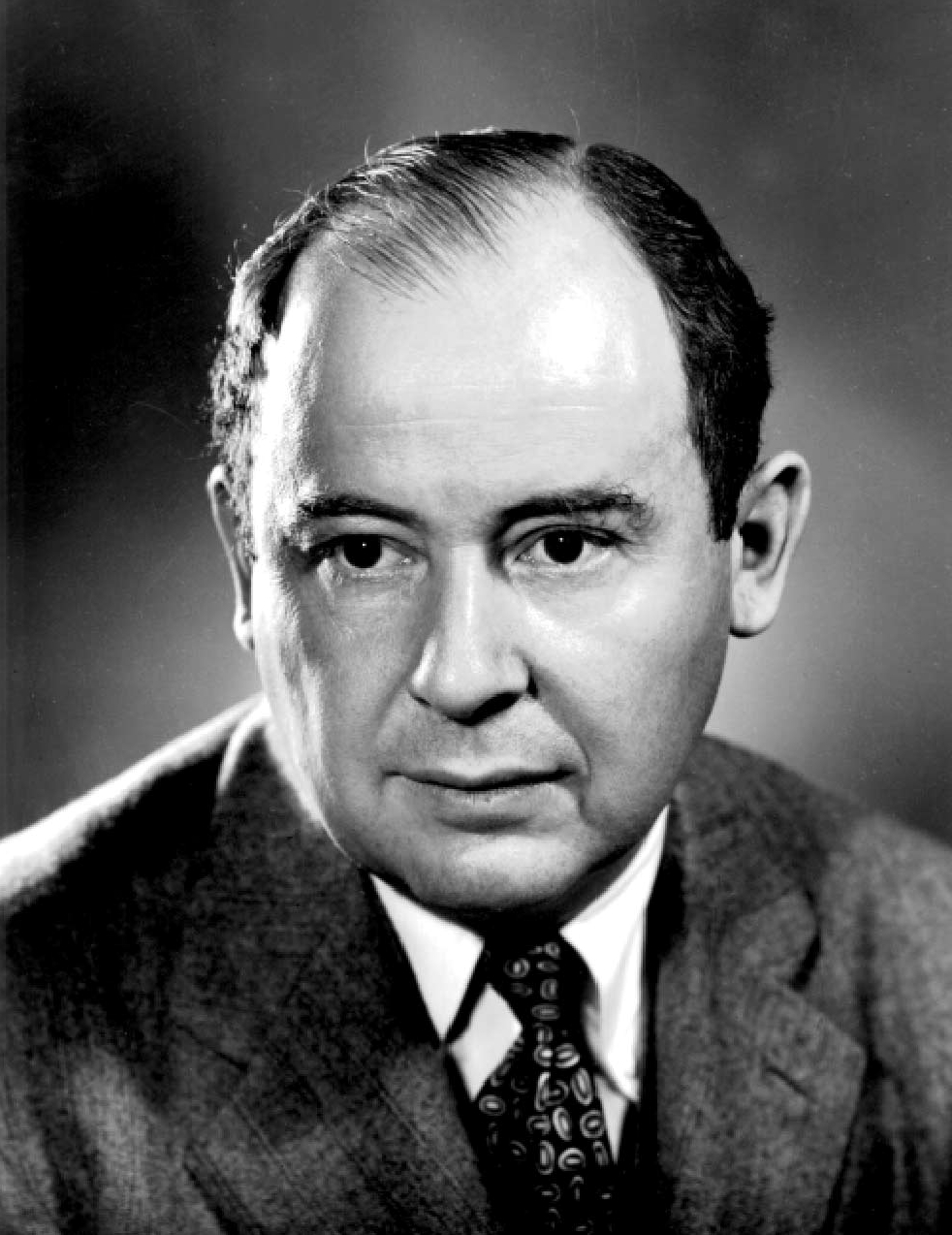
John von Neumann during his Los Alamos period.
John von Neumann during his Los Alamos period. Los Alamos National Laboratory · LANL attribution permission

History & recordOriginal manuscript transcription · 30 June 1945; corrected transcription 1992

1945 · Stored instructions

Von Neumann’s EDVAC draft, dated 30 June 1945: stored-program computing, with instructions held in memory, before the Roswell incident.

The EDVAC draft belongs to the history of stored-program computing: a machine’s instructions can be represented within its memory. The freely readable MIT-hosted transcription reproduces the draft dated 30 June 1945, with later corrections noted. This predates the Roswell incident.

Source details & what was checked
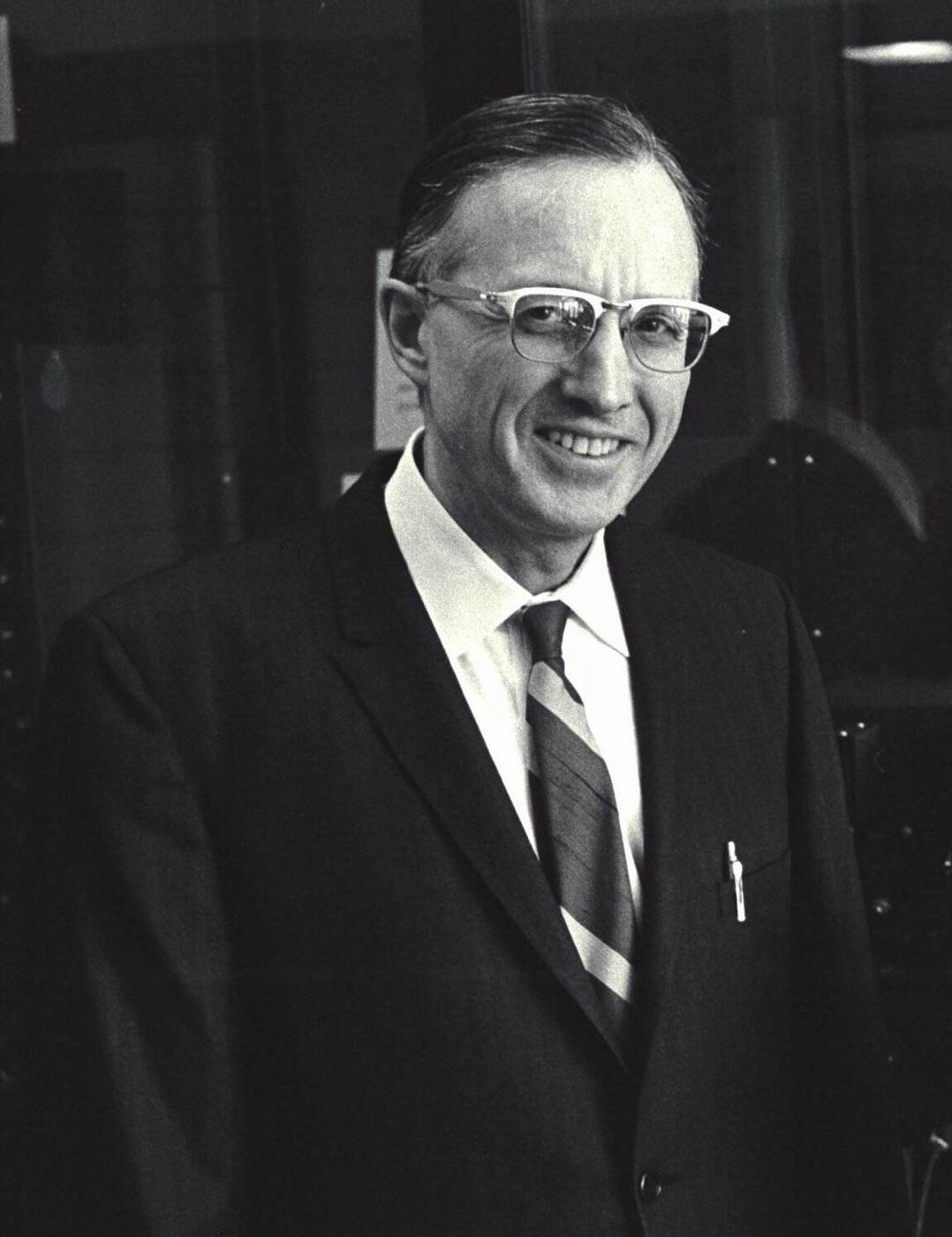
Smiling man in glasses, dark suit and striped tie photographed in front of dark equipment panels
Arthur Burks, March 1971. Cropped extract from a University of Michigan photograph of Burks with a piece of ENIAC, which he helped develop. Burks edited von Neumann's Theory of Self-Reproducing Automata (1966). University of Michigan, News and Information Services · CC BY 4.0

Research & assessmentOriginal collected work · 1966 volume; 1948–49 lectures

1948–49 · Copying a machine and its description

Von Neumann’s core idea: a machine that builds another must also copy its description. Theory from 1948–49 lectures, not a working factory.

Von Neumann’s reproduction problem: a machine constructs another machine while copying the description that specifies it, so the description must both direct construction and pass to descendants. Burks’s editorial preface dates the Hixon lecture to September 1948 and five Illinois lectures to December 1949. This is theoretical automata research, not a demonstration of a functioning autonomous factory.

Source details & what was checked
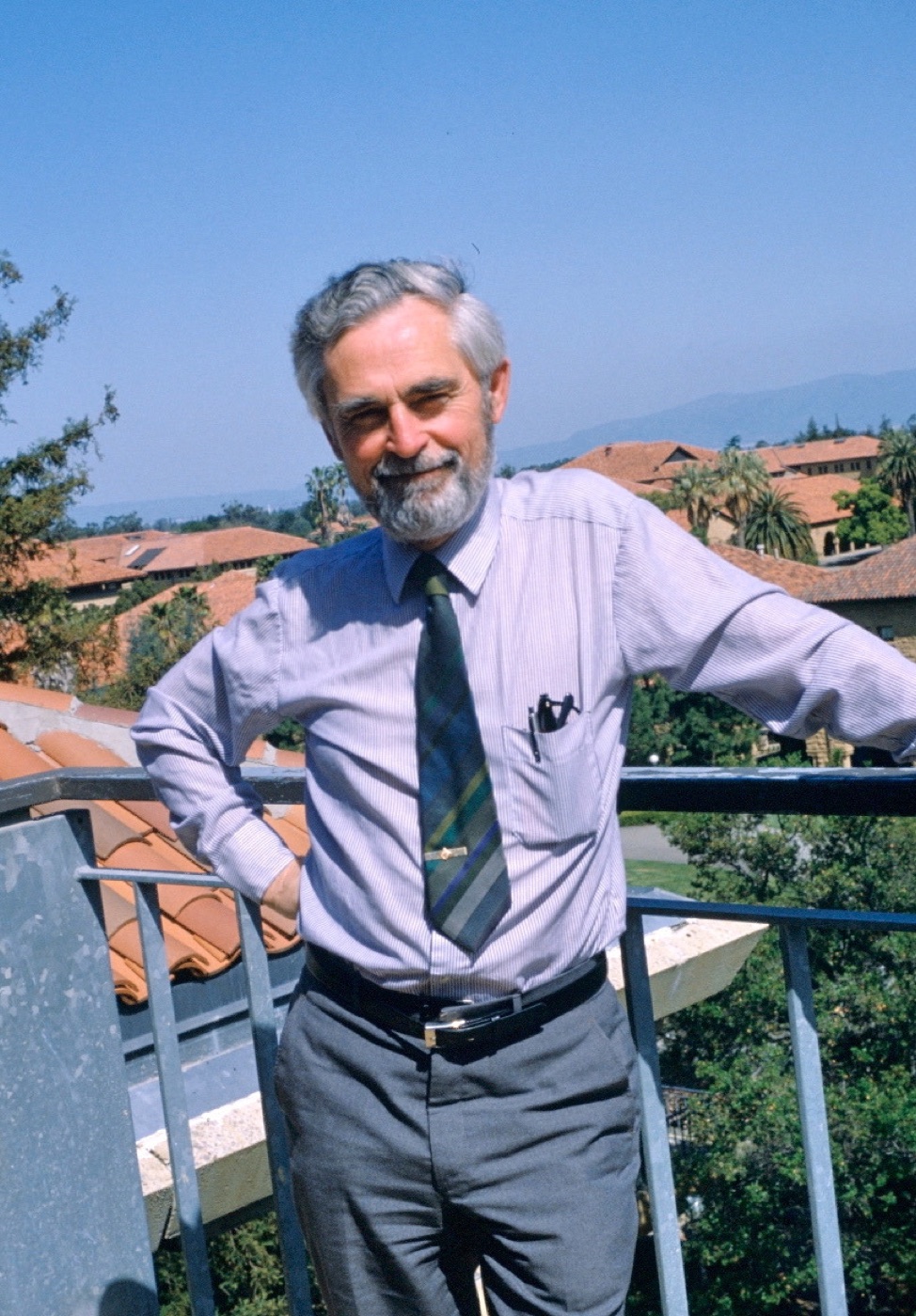
Grey-bearded man in a striped shirt and tie leaning on a rooftop railing with tiled Stanford roofs behind him
Ronald N. Bracewell at Stanford, California, March 1983. Later photograph; his proposal about communication probes was published in 1960. Woodruff T. Sullivan III; NRAO/AUI Archives, Sullivan Collection (Rights NRAO/AUI/NSF) · CC BY 4.0

Theory & argumentSETI hypothesis · 1960

1960 and 1980 · The space-probe extension

Why the “von Neumann probe” is a later idea: Bracewell’s 1960 communication probes and Tipler’s self-reproducing exploration postdate the 1948 lectures.

Bracewell’s 1960 proposal concerns extraterrestrial communication probes, which need not reproduce. Tipler later developed arguments about self-reproducing interstellar exploration. The name “von Neumann probe” links that later concept to replication theory but does not move the extraterrestrial proposal back into the 1948 lectures.

The free NASA reading is an annotated account of Tipler’s argument in a 1984 report, not his original 1980 paper. See printed page 110 (PDF page 134).

Ronald Bracewell · free reading link pendingNASA (external source, opens a new tab)
Source details & what was checked
Back to sections ↑