
Odd AlmanacSearch

Perception, participation & future humans

Further published frameworks that shift what an observer, a world or a visitor might mean.

5 entries · 3 sections

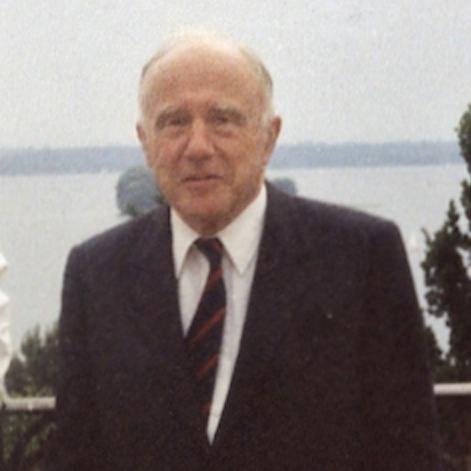
John Archibald Wheeler outdoors beside a lake
John Archibald Wheeler before the Hermann Weyl conference in Kiel, 1985. The repository upload date is later. Emielke · CC BY-SA 3.0

These proposals widen the reading field without turning it into one theory. Hoffman models conscious agents; Wheeler asks how recorded information participates in physics; Masters interprets alleged visitors as future human descendants. Their proximity in this atlas is thematic, not evidence that they agree.

Perception and the underlying world

Hoffman and colleagues’ formal proposals that perception need not depict an independent world accurately and that conscious agents can be modelled mathematically.

Close portrait of a grey-haired man in a blue shirt against green foliage
Donald D. Hoffman, photographed 19 July 2015. Themindoftheuniverse · CC BY-SA 4.0

Theory & argumentFormal consciousness proposal · 2014

Hoffman · Perception as an interface

Hoffman and Prakash’s 2014 proposal that useful perception need not depict an independent world accurately, with a formal framework of conscious agents.

Hoffman and Prakash argue that useful perceptions need not depict an independent world accurately. Their 2014 paper proposes a formal framework of conscious agents instead of treating physical objects as fundamental. That is more specific than calling reality an illusion: it asks how experiences, decisions and actions can be related mathematically.

The paper is a theoretical proposal. It does not establish that reported UAP or psychedelic entities are conscious agents outside spacetime.

Source details & what was checked
Editorial illustration: three overlapping circles
Editorial illustration · Z13 visual study

Theory & argumentFormal consciousness proposal · 9 January2023

When conscious agents combine

A 2023 proposal for combining conscious agents mathematically, with spacetime as a representation of deeper dynamics: a hypothesis, not a demonstrated ontology.

Fusions of Consciousness develops probabilistic mathematics for combining agents and proposes spacetime and particle interactions as representations of deeper dynamics. This is an attributable information-and-consciousness framework, though nonfundamental spacetime alone would not establish conscious agents as the correct replacement.

The source’s relevance to AI is conceptual: computation, representation and experience. It does not demonstrate an AI-triggered awakening.

Source details & what was checked
Back to sections ↑

Who participates in a participatory universe

John Wheeler’s information-based physics and his question of who counts as a participant, including increasingly complex computers.

John Archibald Wheeler outdoors beside a lake
John Archibald Wheeler before the Hermann Weyl conference in Kiel, 1985. The repository upload date is later. Emielke · CC BY-SA 3.0

Theory & argumentFoundational physics proposal · 1990 essay version

Wheeler · It from bit

Wheeler’s 1990 essay treats information as a working hypothesis: physics arises through questions and apparatus-recorded answers, not simply human wishes controlling outcomes.

Wheeler presents information as a foundational working hypothesis: physics arises through questions asked and apparatus-recorded answers. On consciousness, he brackets unresolved questions of subjective experience and emphasises communicable, checkable evidence. His participatory universe is not simply the proposition that human wishes control physical outcomes.

Source details & what was checked
Editorial illustration: a circuit chip with pins
Editorial illustration · Z13 visual study

Theory & argumentFoundational physics proposal · 1990 essay version

Can a computer count as a who

Wheeler considers increasingly complex computers as possible participants, decades before LLMs; a published precedent, not evidence that chatbots have experience.

Wheeler explicitly considers increasingly complex computers when asking who can participate. This is a genuine published connection between information-based physics and nonhuman participants, decades before current LLMs. It does not establish that a chatbot has experience or controls quantum measurement.

His question: “We may someday have to enlarge the scope of what we mean by a ‘who’.” See printed page 320.

Source details & what was checked
Back to sections ↑

A different origin for alleged visitors

One entry on Michael Masters’s hypothesis that alleged UFO occupants could be future human descendants, not extraterrestrials.

Editorial illustration: a double helix with rungs
Editorial illustration · Z13 visual study

Theory & argumentFuture human hypothesis — book excerpt · 2019

Masters · Descendants rather than extraterrestrials

Masters’s 2019 hypothesis that alleged UFO occupants could be human descendants travelling back to study their evolutionary past, not extraterrestrials.

Masters proposes that alleged UFO occupants could be distant human descendants travelling backward to study their evolutionary past. His argument reads humanoid encounter reports through biological and technological extrapolation. The Montana Tech repository establishes the book’s provenance, not validation of time travel. The inspected description supplies no AI or quantum-computing mechanism.

Read as a future-human hypothesis. The full book has not been reviewed for this edition.

Source details & what was checked
Back to sections ↑