
Odd AlmanacSearch

Remote viewing & intelligence research

SRI experiments, the Stargate record, and the unresolved dispute over what the results mean.

6 entries · 3 sections

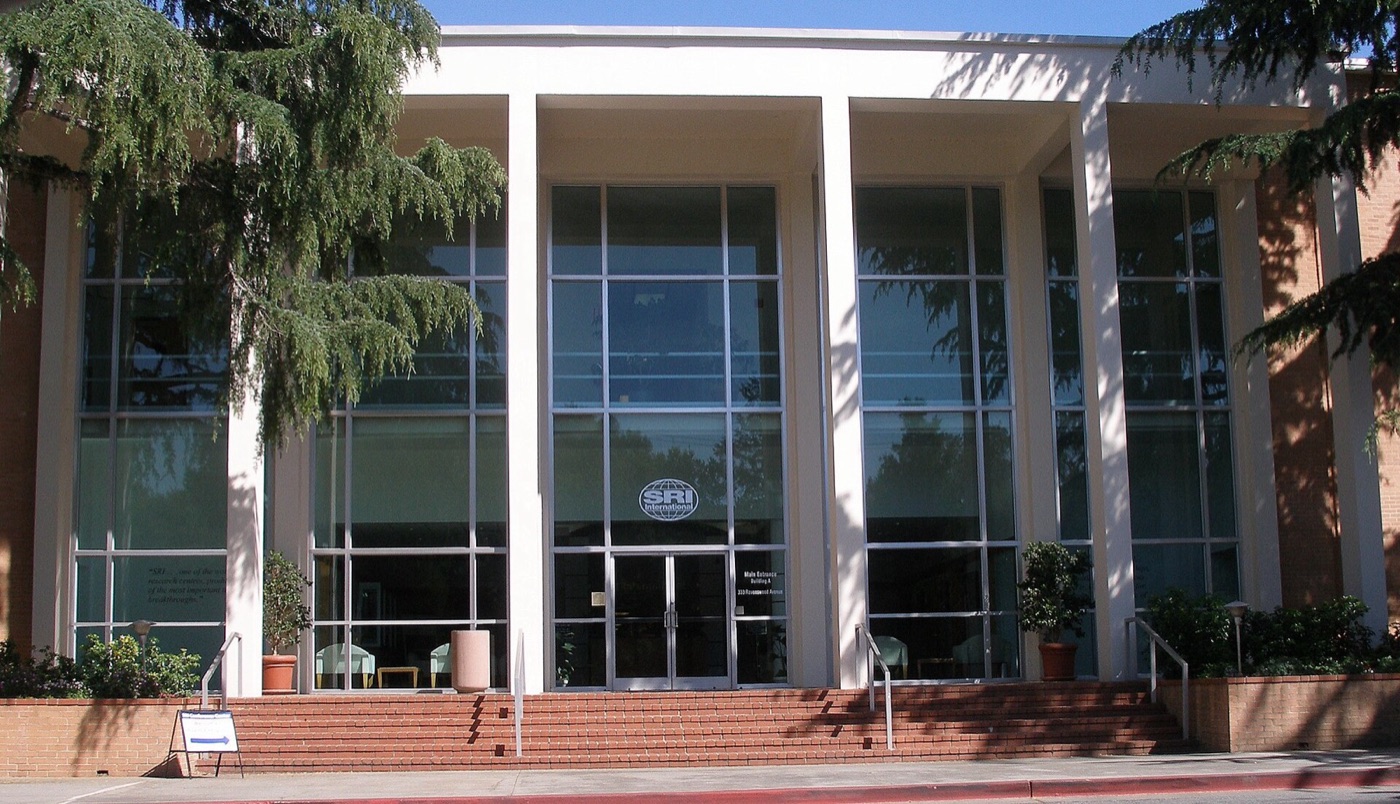
Glass-fronted entrance of a mid-century building with a brick staircase and an SRI International sign
Main entrance of SRI International, 333 Ravenswood Avenue, Menlo Park, California, photographed 6 May 2007. A later photograph of the institution (formerly Stanford Research Institute) where Targ and Puthoff worked; it does not show the experimental rooms. Coolcaesar at English Wikipedia · CC BY-SA 3.0

Remote viewing attempts to describe a target without ordinary sensory access. The programmes, papers and evaluations are documented. That history is distinct from establishing paranormal perception, successful extraterrestrial observation or a quantum explanation.

A genuine institutional history

The 1974 SRI paper, the CIA’s retrospective and the 1995 AIR evaluation: the documented record of the programmes.

Russell Targ, an older man with grey hair and rimless glasses, in a dark zip-up jumper
Russell Targ, photographed by his wife Patricia Targ on 11 May 2014. A much later portrait of the physicist who co-authored the 1974 SRI paper. Patricia Targ (photographer; subject's wife) · Public domain

Research & assessmentExperimental paper — declassified typescript · 1974 paper; declassified 2001

SRI’s sensory-shielding experiments

Targ and Puthoff’s 1974 Nature paper, the primary source for their sensory-shielding claims; it records their argument without settling psychic ability.

Targ and Puthoff’s 1974 Nature paper presents experiments suggesting perception without known sensory channels. It is a primary reference for the researchers’ experimental claims. Publication records the work and its argument; it does not itself settle the broader question of psychic ability.

Source details & what was checked
Editorial illustration: an open book
Editorial illustration · Z13 visual study

History & recordInstitutional retrospective · 2021

What the CIA history confirms

CIA’s retrospective on its psychic research (1972 to 1977, reassessed 1995) and why the results were judged unreliable for intelligence use.

CIA’s retrospective says its psychic research began in summer 1972, stopped in 1977 and was reassessed in 1995. The agency chose not to restore its programme because the results were too unreliable and inconsistent for intelligence use. The AIR report provides fuller context for Stargate and predecessor programmes.

Source details & what was checked
Back to sections ↑

The 1995 dispute is more interesting than a slogan

Three 1995 assessments of the programme’s results: Utts’s positive reading, Hyman’s different inference, and AIR’s split between laboratory effect and operational use.

Editorial illustration: a constellation with one bright star
Editorial illustration · Z13 visual study

Research & assessmentStatistical assessment · 1995

Utts · A positive statistical interpretation

Statistician Jessica Utts’s 1995 assessment, which concluded that the evidence established psychic functioning; one evaluator’s view, not a consensus.

Jessica Utts concluded that the reviewed evidence established psychic functioning and argued for investigating how it worked. This is one named statistician’s assessment within the review process, not a consensus of every evaluator.

Source details & what was checked
Ray Hyman in a blue shirt gesturing while speaking in front of a JREF banner
Ray Hyman speaking at the Los Angeles headquarters of the James Randi Educational Foundation, 28 April 2013. KoKoCorvid · CC BY-SA 4.0

Research & assessmentCritical assessment · 11 September 1995

Hyman · A different inference from the scores

Ray Hyman’s 1995 evaluation: SAIC results not readily dismissed as fluctuation, yet not sufficient evidence of paranormal ability; he called for replication.

Ray Hyman accepted that the SAIC results could not readily be dismissed as statistical fluctuation, but rejected treating that as sufficient evidence of paranormal ability. He called for independent replication and scrutiny of methodological alternatives. His argument identifies no single definitive flaw explaining every reported result.

Source details & what was checked
Editorial illustration: a window onto a horizon and sun
Editorial illustration · Z13 visual study

Research & assessmentProgramme evaluation · 29 September 1995

AIR · Laboratory effects and operational usefulness

AIR’s 1995 verdict: a laboratory statistical effect with no established paranormal cause, but operational descriptions too imprecise to justify intelligence use.

The overall AIR evaluation found a laboratory statistical effect without establishing its paranormal cause. The operational review found descriptions imprecise and dependent on subjective interpretation, insufficient to justify continuing intelligence use. The laboratory and operational questions should remain separate.

Read executive summary E-3–E-5 for the distinction between a statistical effect and a useful intelligence product.

Source details & what was checked
Back to sections ↑

The stranger archival rabbit hole

A single declassified 1984 session record: its archival identity is checked, but it records an exercise, not a scientific observation of Mars.

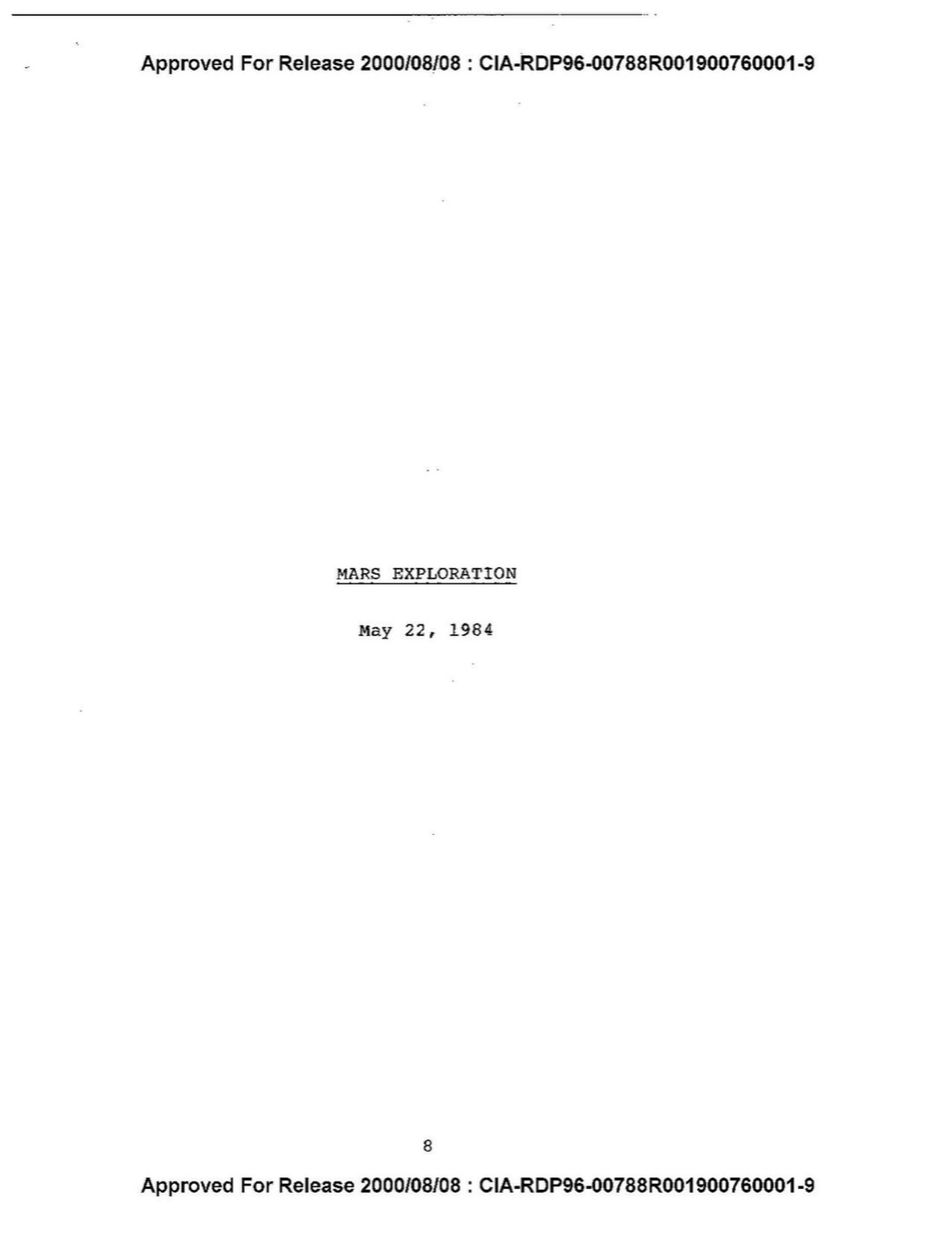
Typewritten page reading MARS EXPLORATION, May 22, 1984, with CIA release stamps at top and bottom
First page of the nine-page declassified scan 'MARS EXPLORATION, May 22, 1984' (CIA Reading Room document CIA-RDP96-00788R001900760001-9, stamped approved for release 8 August 2000). It carries only the title and date; the printed page number is 8. Monitor and Subject (as credited on the file page); CIA Reading Room scan · Public domain

History & recordDeclassified session record · 22 May 1984

Mars Exploration · 22 May 1984

Nine-page declassified session record (22 May 1984) with a Monitor and Subject: an exercise record, not an observation of Mars.

A nine-page declassified session document survives under CIA identifier RDP96-00788R001900760001-9, with its participants labelled Monitor and Subject. Its archival identity and date were checked. The session text was not reliably extracted in this review, so detailed stories about what it describes are not repeated here.

An authentic declassified session is a record of an exercise. It is not a scientific observation of Mars.

Source details & what was checked
Back to sections ↑