
 Odd Almanac
Added · Daily discovery
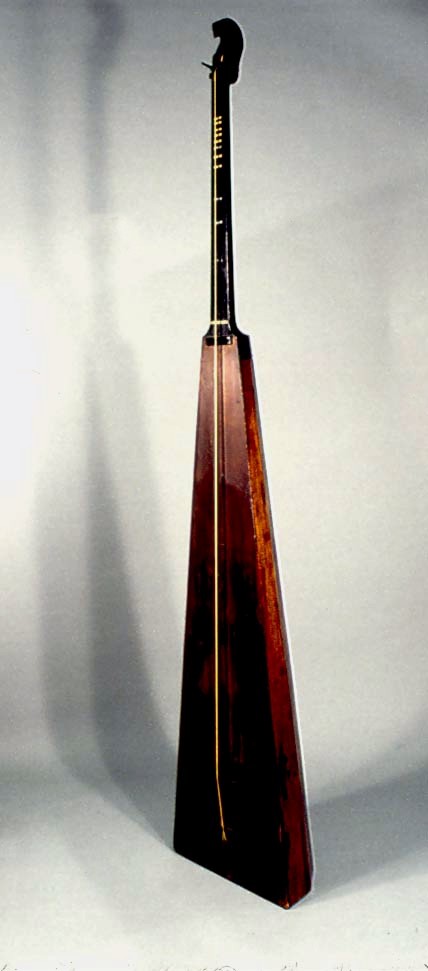
A trumpet marine has a bow and one playing string. The brass-like buzz comes from a little foot on the bridge. The string bears down over one side of the bridge, leaving the other side free to chatter against the wood when the player bows.
The Musical Instruments Museum in Brussels explains the mechanism alongside an example made by F. Houyet in Namur in 1680. The player lightly touches the string to bring out different harmonics, the higher tones in the vibrating string. The rattle adds a rough edge to those tones. The museum compares the result to a muted trumpet.
The Brussels museum calls it a nun’s trumpet too and records its occasional use as a signal in seventeenth- and eighteenth-century convents. The name’s origin is less certain. The museum suggests that it may come from a name referring to Mary.
In Florence the instrument had a part in an opera. The Galleria dell’Accademia’s catalogue says a tenor in Giovanni Paisiello’s Socrate immaginario sang a duet with a trumpet marine and made a joke about its harsh sound. The Brussels account tells you how that sound is made. The Florence record shows a composer giving it a job.
Source details & what was checked
- Musical Instruments Museum, Brussels · Page undated. Instrument dated 1680.
The record identifies F. Houyet, Namur, 1680 and inventory 0217. It explains a bow on the playing string, light finger touch to produce harmonics and a vibrating bridge foot that rattles against the body. It describes occasional convent use and gives its proposed derivation for the name. The museum proposes rather than establishes the name’s origin. Its example is different from the Florence and Met objects. No sound sample was observed.
Trumpet marine or nun’s trumpet (external source, opens a new tab) · In the source library - Galleria dell’Accademia di Firenze · Page undated.
The catalogue explains the loaded and free feet of the bridge. Its historical paragraph places the instrument in the Grand Duke’s collection, mentions Lorraine court performances into the nineteenth century and gives the tenor’s duet and line from Giovanni Paisiello’s Socrate immaginario. The opera account is attributed to the Galleria. The underlying score and any performance recording were outside the inspection. The web reader reported a tool-side 502, while the normal exact HTTPS fetch produced complete article text with HTTP 200.
Marine trumpet (external source, opens a new tab) · In the source library