
 Odd Almanac
Added · Daily discovery
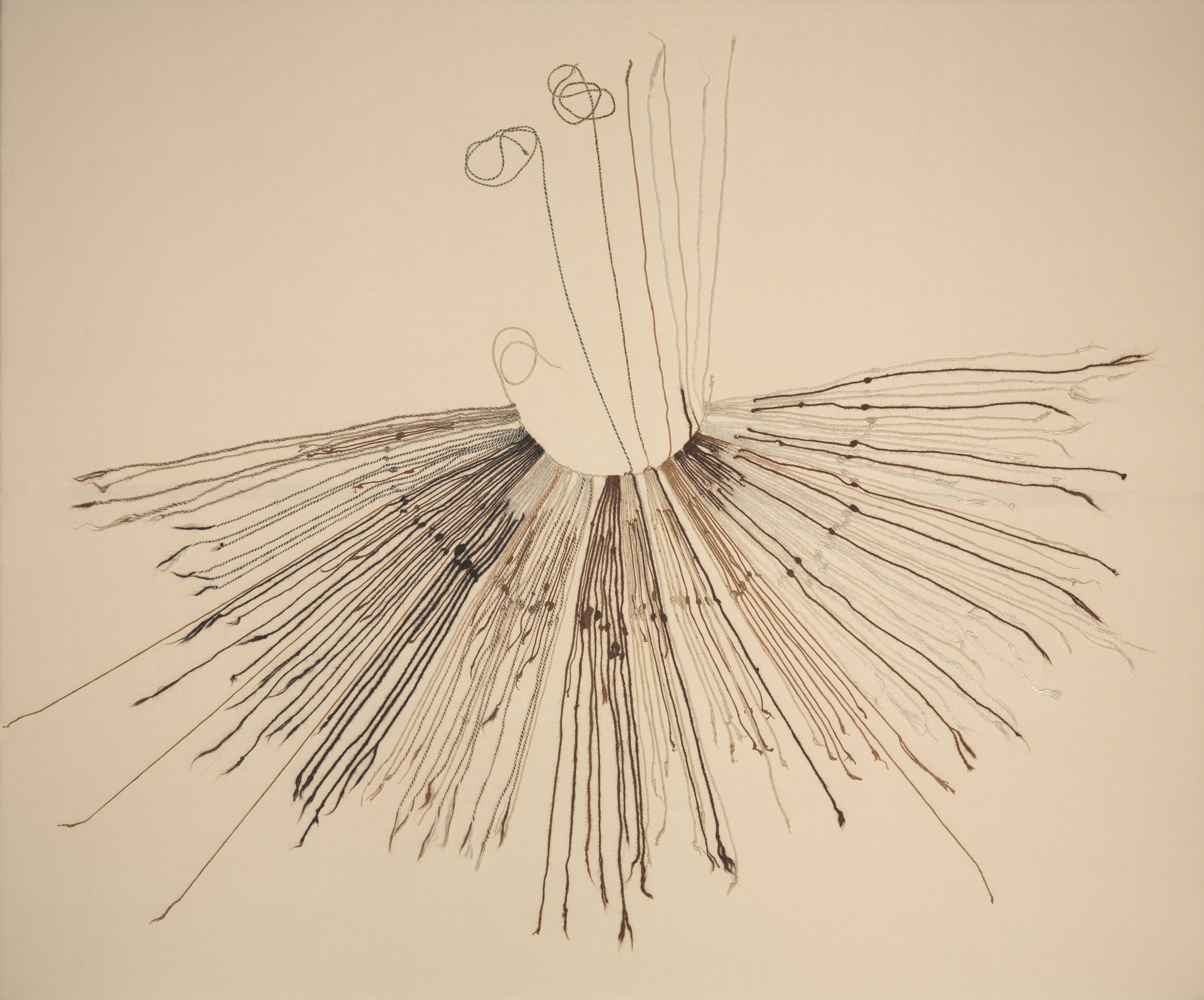
One cord in an Inka khipu at the Pachacamac Site Museum in Peru records 11,540. To see the last digit, look where the lowest knot would go. There is only cord at that level. In the published reading of the specimen, the bare stretch is the zero.
A khipu, also spelled quipu, typically has a thick main cord with thinner cords attached to it. On a numerical khipu, knots along a pendant cord can record a number in base ten. The ones sit farthest from the main cord. Tens sit a little closer, with hundreds and thousands closer still. Across several hanging cords the places line up in rough rows, so even an unknotted place has an address.
The ones have their own knots. A figure of eight stands for one, while two to nine can be made with a single long knot wound the corresponding number of times. Higher places use groups of simple knots. In Carmen Gonzalez’s illustrated reading of the Pachacamac specimen, you can follow a single pendant through the ten-thousands, thousands, hundreds and tens. Its final place needs no knot at all.
The number is easier to read than the record. Gonzalez points out that understanding the arithmetic of numerical khipus often leaves open what the numbers counted. Researchers also study cord colour, twist and the way pendants attach to the main cord for clues. Look at Figure 6 in her article and the text just above it. Together they show how the cord reads 11,540, with the unit of account still unstated.
Source details & what was checked
- Carmen Gonzalez · Undated on the English article
The article describes the standard khipu structure, reproduces knot types in figures 4–5 and interprets the marked pendant on Pachacamac MSP 1396 as 11,540 in figure 6, with no units knot. It discusses why knowing the number often leaves its meaning unresolved. The named author appears after the article. The caption attributes the figure photograph to Pereyra 2006, page 15. The responsive figure renditions can trim annotation edges. The prose immediately above figure 6 explicitly states the value and absent knot.
Quechua oral numeration and its writing in quipus (external source, opens a new tab) · In the source library - NIST Museum, in collaboration with Dumbarton Oaks Museum · 29 September 2023, updated 23 January 2025
Figure 2 identifies the main and pendant cords, figure 3 illustrates decimal positions, and figures 4–6 show attachment, twist and colour features. Later sections label photographs of replicas and a modern SI-themed khipu separately. The museum supplies a suggested citation and last update.
Standardizing an Empire (external source, opens a new tab) · In the source library