
 Odd Almanac
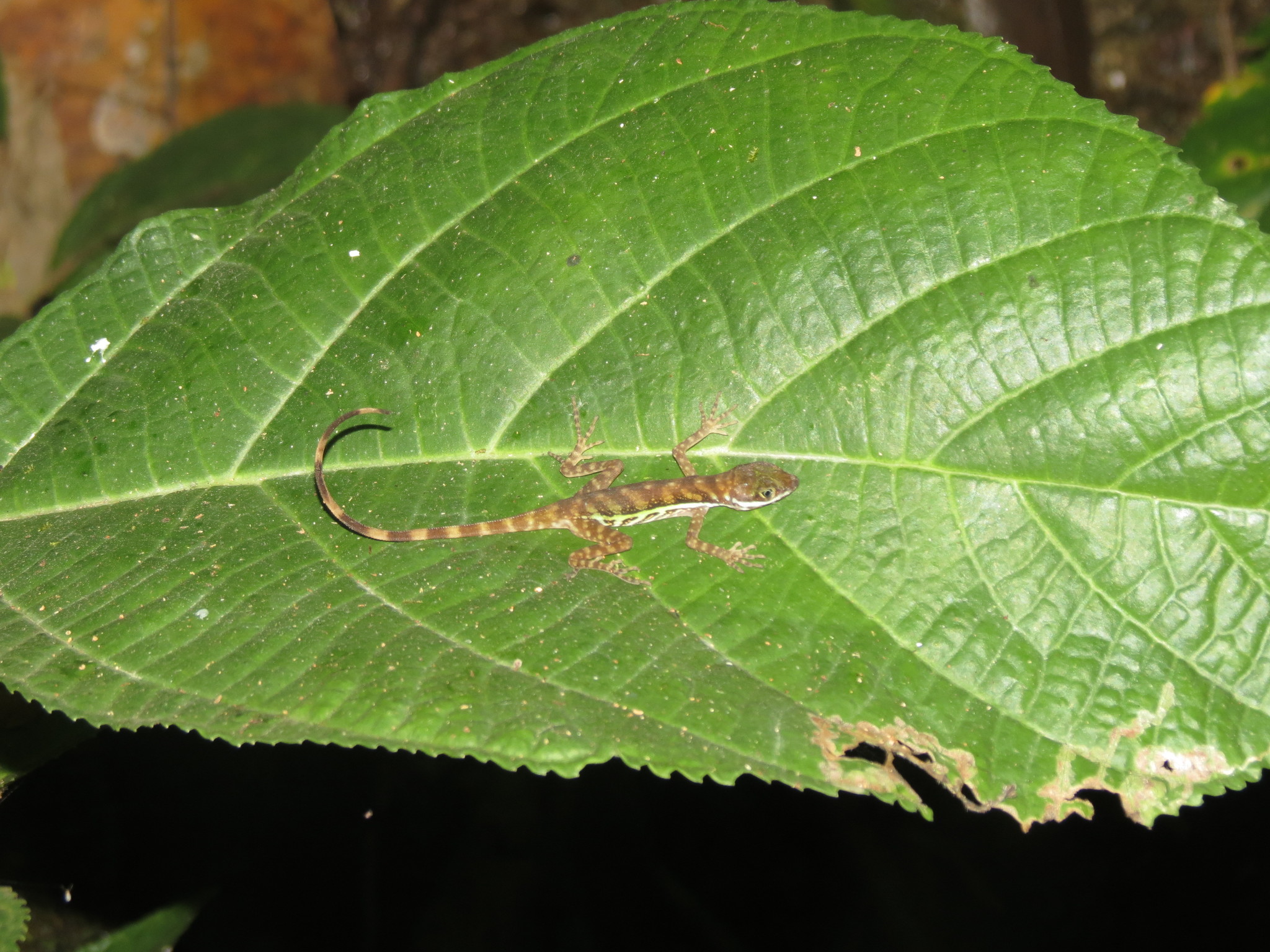
Added · Daily discovery
Watch the snout of a submerged water anole. A bubble swells against the lizard’s skin, then shrinks until it disappears. The lizard has drawn the air back in. In photographs from Lindsey Swierk’s 2024 study, the bubble sits either on top of the snout or beside it, between the eye and nostril.
Water anoles live along rocky streams in parts of Costa Rica and Panama. They can dive to escape predators. Tiny structures on the skin of semi-aquatic anoles help hold a film of air against the body. Swierk wanted to know what difference the bubbles made to the time these lizards could spend out of sight.
She compared two randomly assigned groups in a streamside tank in Costa Rica. An emollient interrupted normal bubble formation in one group, with the nostrils left clear. The other group received water. Each trial ended when the animal surfaced. Of the 28 completed trials, one unusually long control dive was excluded from the analysis. Swierk reported that lizards with normal bubbles stayed down an average of 67.5 seconds longer.
A follow-up asked where the bubble’s oxygen comes from. Alexandra M. Martin, Diane Cordero-De La Cruz and Swierk varied the amount of oxygen dissolved in the tank water. The lizards dived longest in the highest-oxygen treatment. That pattern is consistent with oxygen passing from the water into the bubble. In her account of the study, Swierk identifies directly measuring that transfer as a next step.
Start with Figure 1 of the 2024 paper. The first four frames show the same bubble at intervals of a fifth of a second. The sequence puts a visible action behind the extra time measured by the stopwatch.
The second source is a freely readable explanation by a study coauthor. The follow-up measured dive duration in water with different dissolved oxygen levels.
Source details & what was checked
- Lindsey Swierk · 18 September 2024 (Biology Letters and PMC citation)
Read abstract, introduction, Figure 1 caption, methods, results, Table 1 and the discussion. Figure 1 shows dorsal and lateral bubbles and an eight-frame sequence. Its caption gives 0.2-second intervals for the first four frames (i–iv). The 28 completed trials consisted of 15 controls and 13 treated animals before one control outlier was dropped. Results report the 67.5-second difference. The prose uses seconds because the abstract and discussion use differing percentage baselines.
Novel rebreathing adaptation extends dive time in a semi-aquatic lizard (external source, opens a new tab) · In the source library - Lindsey Swierk · 15 October 2025
Read main article and figure captions, including the dissolved-oxygen tank results, and the author’s statement that a next step is direct measurement of oxygen diffusion into the bubble. Read the one comment on the post. Embedded video playback and optional links were not promised or tested.
Rebreathing Semi-aquatic Anoles: Just a Scuba Tank… or Something More? (external source, opens a new tab) · In the source library