
 Odd Almanac
Added · Daily discovery
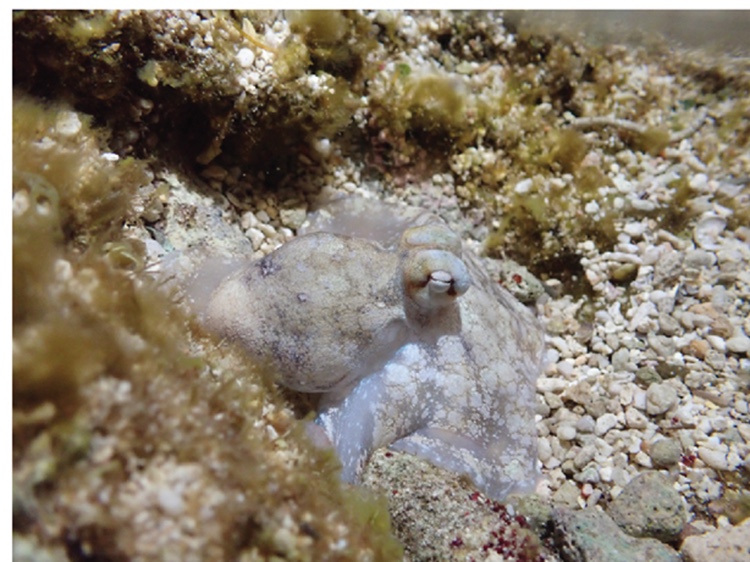
The pale octopus in Keishu Asada’s photograph is in quiet sleep, according to its OIST image record. The institute identifies the animal as Octopus laqueus; the record is dated 28 June 2023.
In this species, quiet sleep gives way roughly once an hour to about a minute of active sleep. Arms and eyes twitch, breathing quickens and skin colours change. A 2023 study at OIST and the University of Washington compared these episodes with waking behaviour.
Dani Ellenby’s OIST report describes two checks supporting the sleep interpretation. Sleeping animals required stronger physical stimulation before responding. After sleep was interrupted, active sleep returned sooner and more frequently. Recorded brain activity during the active phase also resembled the waking state.
When awake, octopuses control thousands of pigment cells to produce patterns used in camouflage and communication. During active sleep, the researchers observed the same repertoire of skin patterns cycling past.
Dreaming is one possible explanation, alongside practising camouflage patterns or maintaining pigment cells. The researchers had not established which explanation was correct. The observed colour changes are a finding; the animal’s experience remains an open question.
Read the university’s account for its tests and competing explanations. The credited photograph records the quieter stage, rather than a sequence of the active colour changes.
Research reported by the institution that conducted it. Dreaming remains an unconfirmed interpretation.
Source details & what was checked
- Dani Ellenby / Okinawa Institute of Science and Technology · 28 June 2023
Complete first-party university report read, including behavioural sleep checks, brain-activity and skin-pattern observations, and the researchers’ competing explanations. The report distinguishes findings from the unresolved dreaming interpretation. This reading trail offers the institutional account; the full technical paper and embedded video were not reviewed.
Octopus sleep is surprisingly similar to humans and contains a wake-like stage (external source, opens a new tab) · In the source library