Unusual things, found and filed.Independent web · Since 2026
Odd Almanac
Search

Sleep beyond the human brain

Quiet bodies, changing skin and careful experiments.

7 entries · 2 sections

Editorial illustration: a wide-open eye
Editorial illustration · Z13 visual study

A small directory of research on sleeping animals. Each entry separates measured changes from hypotheses about experience.

Octopus sleep

A quiet photograph and an active research question.

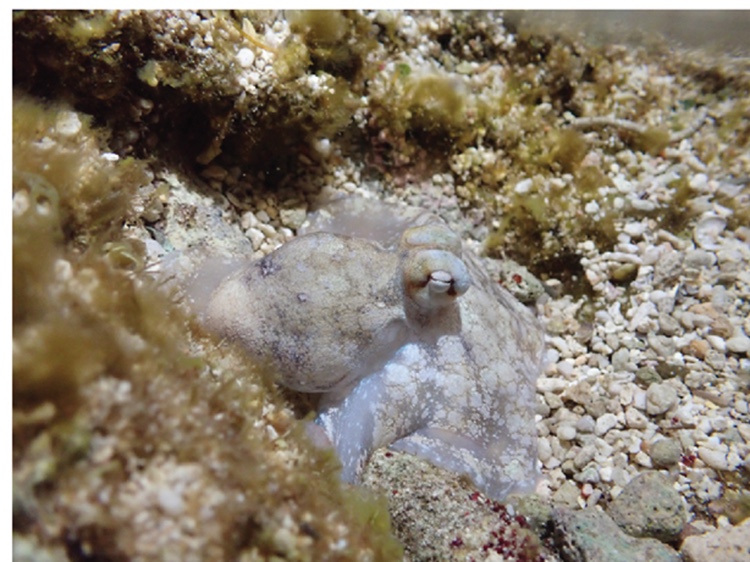
A pale octopus with a nearly closed eye rests among coral fragments, algae and stones.
Octopus laqueus during quiet sleep, identified by OIST. Photograph by Keishu Asada (OIST); the image record is dated 28 June 2023. This still image shows the quiet stage, not an active colour-change sequence. Keishu Asada (OIST); © OIST · CC BY 4.0

Research & assessmentUniversity research summary · 28 June 2023

The octopuses that change colour in their sleep

In Octopus laqueus, quiet sleep alternates with brief bursts of colour and brain activity resembling wakefulness.

Added · Daily discovery

The pale octopus in Keishu Asada’s photograph is in quiet sleep, according to its OIST image record. The institute identifies the animal as Octopus laqueus; the record is dated 28 June 2023.

In this species, quiet sleep gives way roughly once an hour to about a minute of active sleep. Arms and eyes twitch, breathing quickens and skin colours change. A 2023 study at OIST and the University of Washington compared these episodes with waking behaviour.

Dani Ellenby’s OIST report describes two checks supporting the sleep interpretation. Sleeping animals required stronger physical stimulation before responding. After sleep was interrupted, active sleep returned sooner and more frequently. Recorded brain activity during the active phase also resembled the waking state.

When awake, octopuses control thousands of pigment cells to produce patterns used in camouflage and communication. During active sleep, the researchers observed the same repertoire of skin patterns cycling past.

Dreaming is one possible explanation, alongside practising camouflage patterns or maintaining pigment cells. The researchers had not established which explanation was correct. The observed colour changes are a finding; the animal’s experience remains an open question.

Read the university’s account for its tests and competing explanations. The credited photograph records the quieter stage, rather than a sequence of the active colour changes.

Research reported by the institution that conducted it. Dreaming remains an unconfirmed interpretation.

Source details & what was checked
Back to sections ↑

Ways of sleeping

Different species, different measurements; observed sleep patterns do not reveal an animal’s private experience.

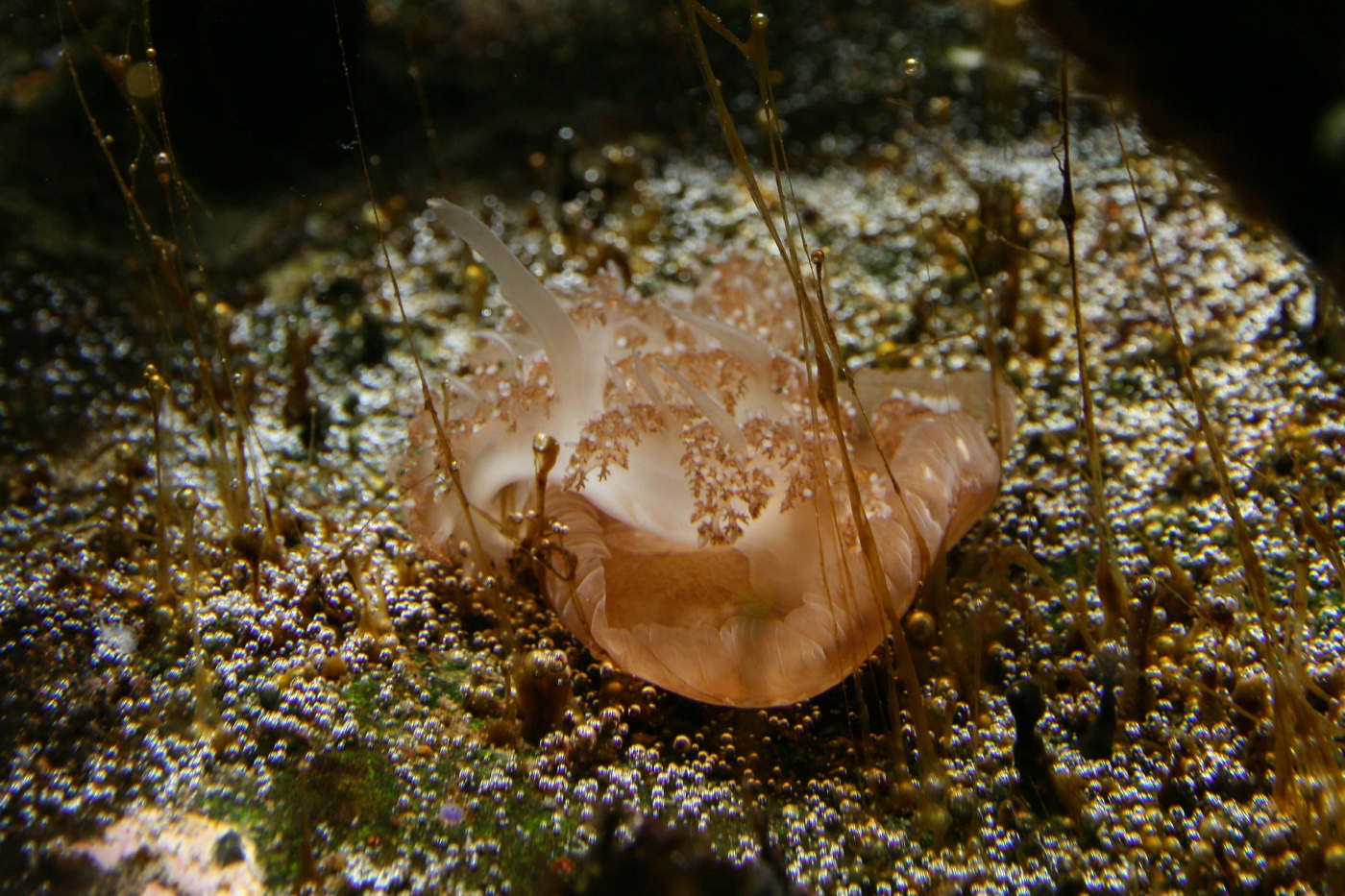
An upside-down jellyfish with its branching oral arms facing upward.
An upside-down jellyfish, Cassiopea xamachana, photographed 25 June 2016. A contextual species photograph, not a record of the 2017 sleep experiment. Marco Almbauer · Public domain

History & recordFirst-party institutional account · 21 September 2017

The upside-down jellyfish with a sleep-like state

Cassiopea passed behavioural tests for reduced activity, slower responses and recovery after disturbed nights.

A jellyfish does not need a centralised brain to show a measurable sleep-like state. In 2017, researchers at Caltech tested Cassiopea using the animal’s regular pulses as a record of activity.

Ravi Nath, Claire Bedbrook, Michael Abrams and their colleagues looked for three features: a quiet period, reduced responsiveness during that period and compensation after sleep disruption. The animals pulsed less often at night, responded more slowly to a disturbance and became less active the following day after interrupted nights.

The university’s account explains why stillness alone would not have been enough. An inactive animal might simply be resting; the responsiveness and recovery tests made the case for a sleep-like state stronger.

The researchers used the result to investigate how early sleep may have arisen in animal evolution. It did not establish what a jellyfish experiences or whether it dreams. The linked institutional account describes the experiments, with the evolutionary questions kept distinct from the behaviour they measured.

Source details & what was checked
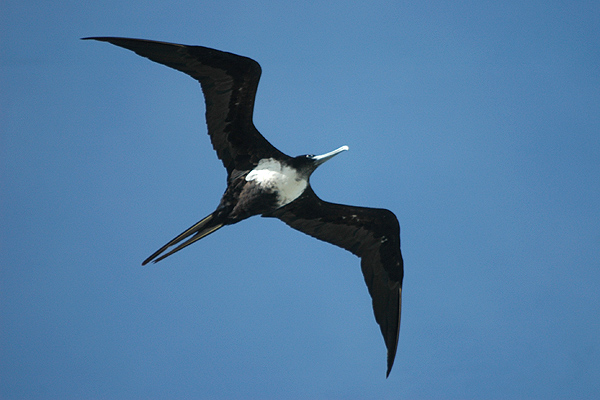
A female great frigatebird flying with long wings extended.
A female great frigatebird at Lady Elliot Island, Queensland, 19 January 2008. A contextual photograph, not one of the Galápagos birds monitored in the 2016 study. Tom Tarrant (Aviceda at English Wikipedia) · CC BY 3.0

History & recordFirst-party institutional account · 3 August 2016

The frigatebirds caught sleeping on the wing

Brain recordings showed great frigatebirds sleeping during soaring flights, sometimes with both hemispheres at once.

A bird remaining airborne for days does not by itself prove that it sleeps in flight. Niels Rattenborg and colleagues tested that question by recording brain activity and head movements in great frigatebirds.

Their 2016 study followed nesting females from the Galápagos during foraging flights. A small recorder monitored both brain hemispheres, while GPS provided the birds’ positions and altitude. The signals showed slow-wave sleep during soaring, involving either one hemisphere or both together.

The researchers also recorded brief episodes of rapid-eye-movement sleep. The presence of sleep in both hemispheres was a useful correction to the assumption that keeping one side awake must always be necessary to stay airborne.

The surprising limit was quantity: the institutional account reports an average of about forty-two minutes of sleep per day in flight, compared with more than twelve hours back on land. How the birds maintain performance with so little airborne sleep remained unresolved. This is a result for measured frigatebirds, rather than proof about every long-distance flyer.

Source details & what was checked
  • Max Planck Society; Niels Rattenborg and colleagues · 3 August 2016
    Complete main report read: recorder/GPS method, uni-/bihemispheric SWS, short REM,42minute mean and land comparison. No generalisation to all continuously flying species. Writer meaningful web reading; desktop/mobile reader QA remains pending. Exact MPG report signature: SSp/HR; initials retained literally without an invented expansion (independent reviewer observation, imported with its provenance).
    First evidence of sleep in flight (external source, opens a new tab) · In the source library
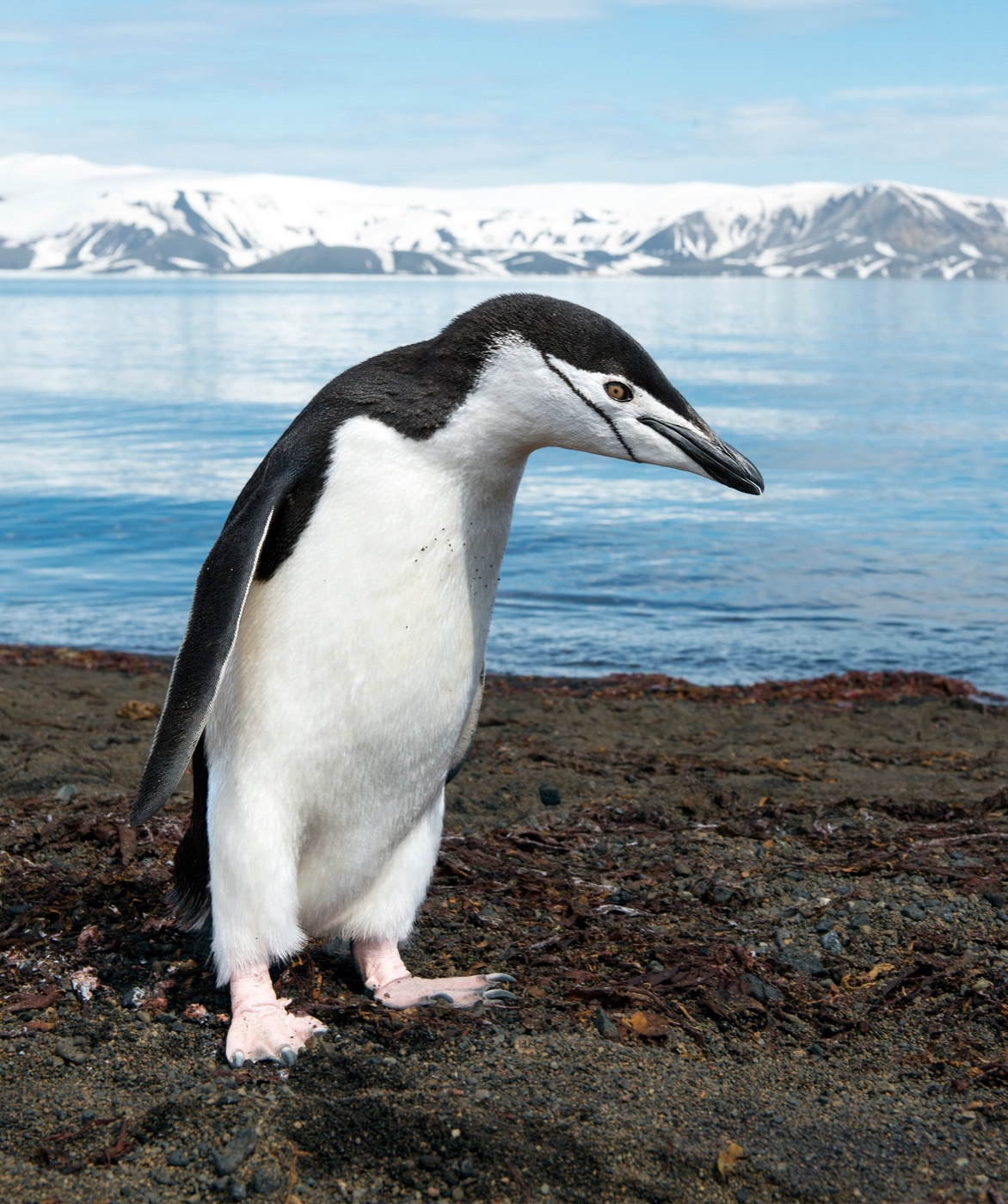
A chinstrap penguin standing on Deception Island.
A chinstrap penguin on Deception Island, Antarctica, 8 January 2013. The sleep study discussed here took place on King George Island. Christopher Michel · CC BY 2.0

History & recordFirst-party institutional account · 30 November 2023

The penguins that accumulate sleep a few seconds at a time

Nesting chinstrap penguins obtained substantial sleep through thousands of extremely short episodes.

A chinstrap penguin guarding a nest may close its eyes for only a few seconds. In a 2023 field study, those short interruptions added up to substantial daily sleep.

Paul-Antoine Libourel, Won Young Lee and colleagues recorded behaviour and brain activity in breeding penguins on King George Island, Antarctica. The animals showed slow-wave sleep in both hemispheres together or one hemisphere at a time. Most combined sleep bouts lasted less than five seconds.

The study reported more than ten thousand episodes per day, with roughly eleven to twelve hours of slow-wave sleep accumulated by each hemisphere. These were EEG-defined episodes, not a count inferred only from photographs of closed eyes.

The birds successfully raised young under those conditions. The researchers interpreted this as evidence that at least some benefits of sleep can accumulate in tiny fragments. That inference does not demonstrate every restorative function directly, or show that such a schedule would suit humans. The setting is a nesting colony, with its own demands for vigilance.

Source details & what was checked
Female northern elephant seals lying on a beach.
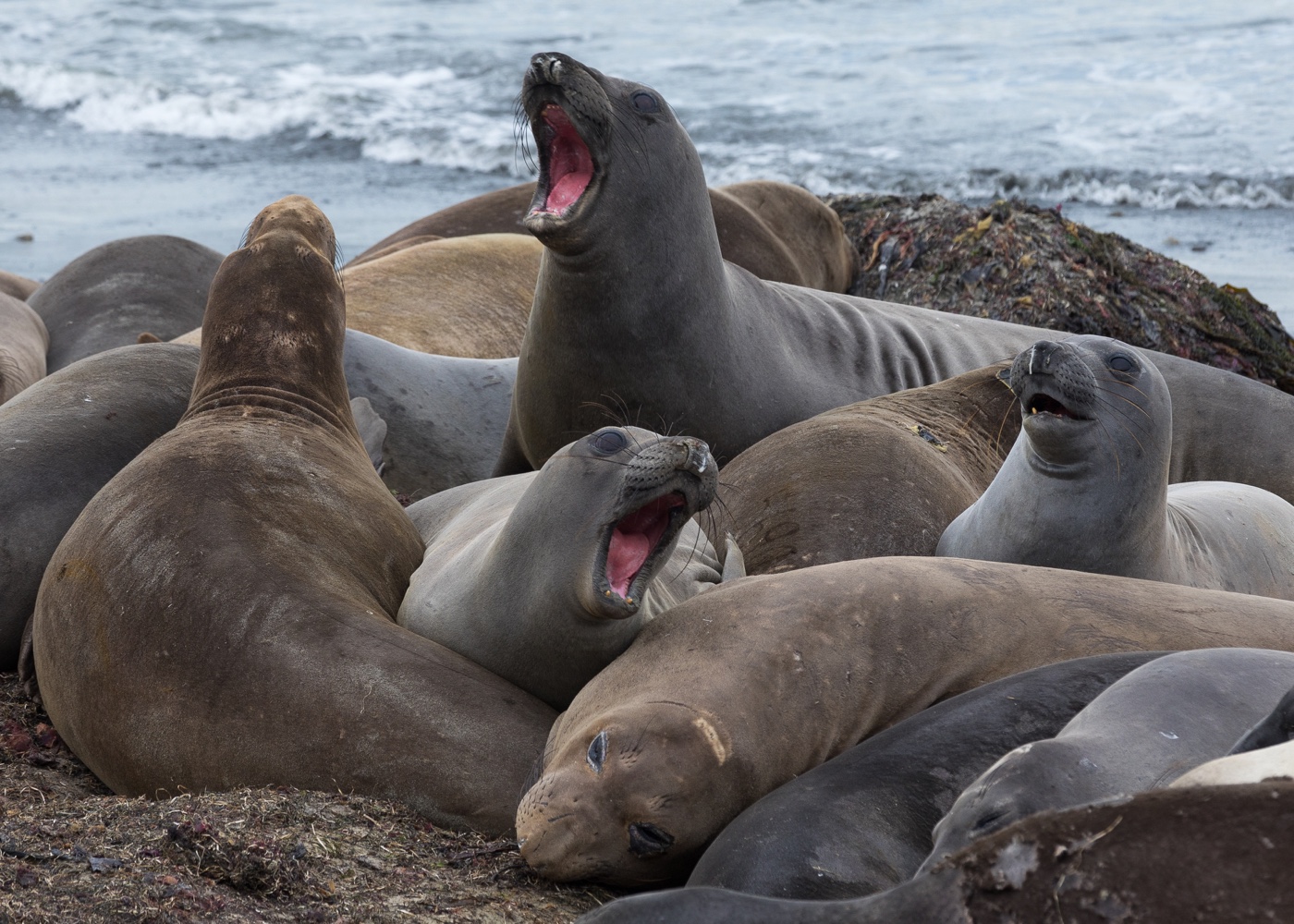
Female northern elephant seals on the beach at Año Nuevo State Park, California, 5 May 2018. A contextual photograph ashore, not a recorded sleep dive. Frank Schulenburg · CC BY-SA 4.0

History & recordFirst-party institutional account · 20 April 2023

The seals that spiral downwards while asleep

A waterproof brain-recording system revealed short sleeping dives in northern elephant seals.

A descending elephant seal can be asleep rather than merely drifting. Jessica Kendall-Bar and colleagues developed a waterproof headcap to record brain activity during dives, pairing those signals with movement and depth measurements.

The 2023 research followed juvenile female northern elephant seals and recorded more than a hundred sleep dives. During slow-wave sleep, a seal could keep a controlled downward glide. On entering rapid-eye-movement sleep, loss of postural control could turn the animal belly-up and into a descending spiral.

The team used the recordings to identify sleep from dive behaviour, then estimated sleep patterns in a much larger archive of tracked adult seals. The institutional report describes about two hours of daily sleep during foraging trips at sea, compared with much longer periods ashore.

That distinction matters: direct brain measurements came from a smaller group, while broader sleep estimates used the calibrated dive patterns. The work concerns northern elephant seals in a particular ecological setting, without offering a human sleep schedule or describing every marine mammal.

Source details & what was checked
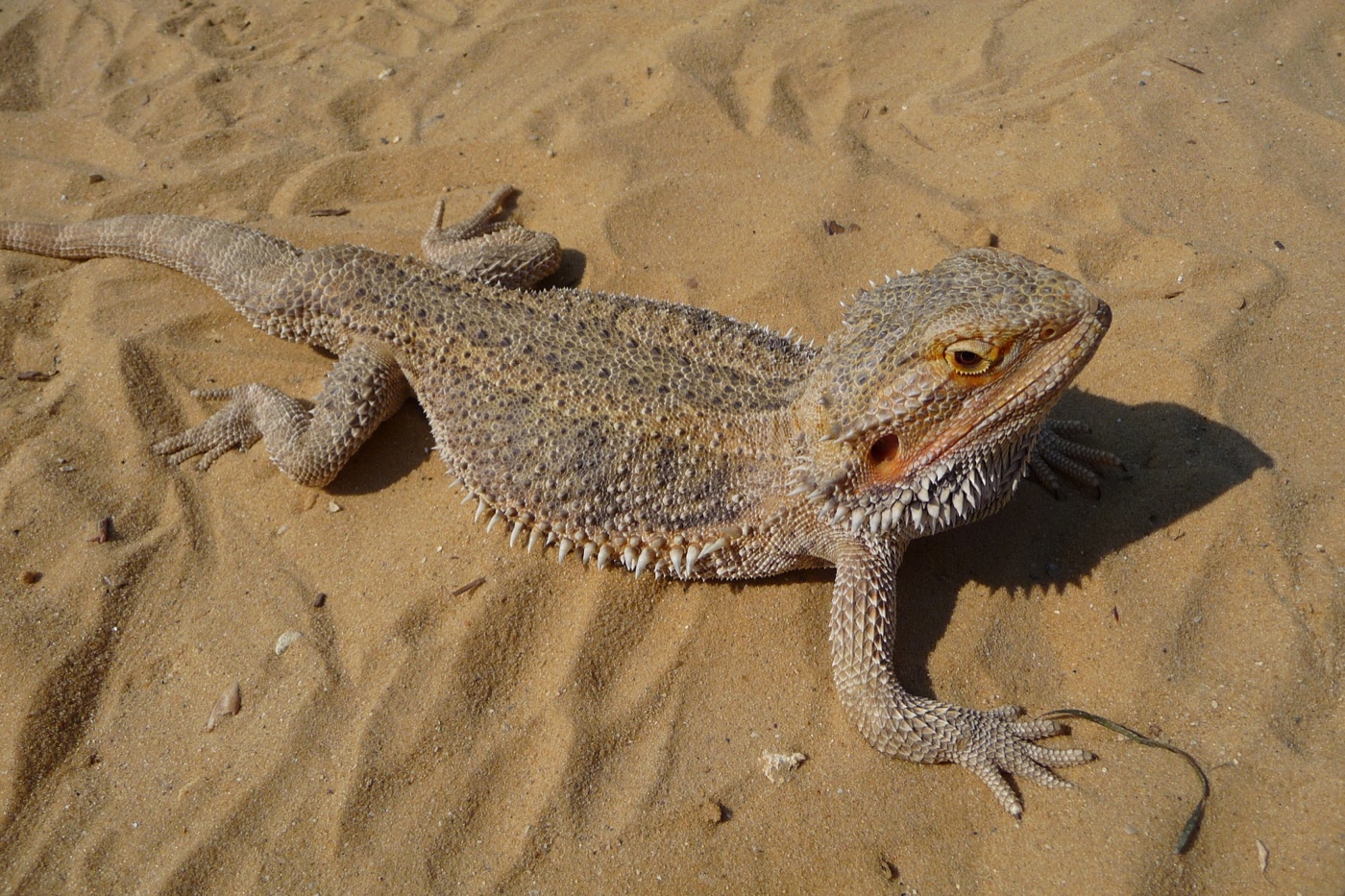
Close view of a central bearded dragon’s head and textured scales.
A central bearded dragon, Pogona vitticeps, photographed 8 August 2009. A contextual species photograph, not a subject from the 2016 sleep study. George Chernilevsky · Public domain

History & recordFirst-party institutional account · 28 April 2016

The lizards with two alternating sleep states

A 2016 study in bearded dragons recorded slow-wave and REM-like sleep features in a reptile.

Bearded dragons added an unexpected branch to research on sleep stages. In 2016, Gilles Laurent’s group described two alternating patterns of brain activity in the Australian lizard Pogona vitticeps.

The researchers compared electrical signals with observable behaviour, including eye movements. One state had slow-wave features; the other combined wake-like brain activity with rapid eye movements. The Max Planck account describes similarities to mammalian sleep alongside important differences.

The alternation was particularly quick and regular: at the reported temperature of 27°C, a cycle lasted about eighty seconds. Slow-wave and REM phases also occupied more similar lengths of time than they typically do in mammals.

The team argued that finding related patterns in reptiles, birds and mammals supports an ancient common origin. That is an evolutionary interpretation of the comparisons, rather than a measurement of a dinosaur’s sleep. The observed brain states also do not reveal whether a bearded dragon has a dream like a human’s.

Source details & what was checked
  • Max Planck Society / Max Planck Institute for Brain Research; Gilles Laurent and colleagues · 28 April 2016
    Complete main institutional report read: signal/eye-movement criteria,80second cycle at27C, phase-duration differences and common-origin argument. Dreams and ancient species are not directly observed. Writer meaningful web reading; desktop/mobile reader QA remains pending. Exact MPG report signature: AV/HR; initials retained literally without an invented expansion (independent reviewer observation, imported with its provenance).
    Bearded dragons show REM and slow wave sleep (external source, opens a new tab) · In the source library
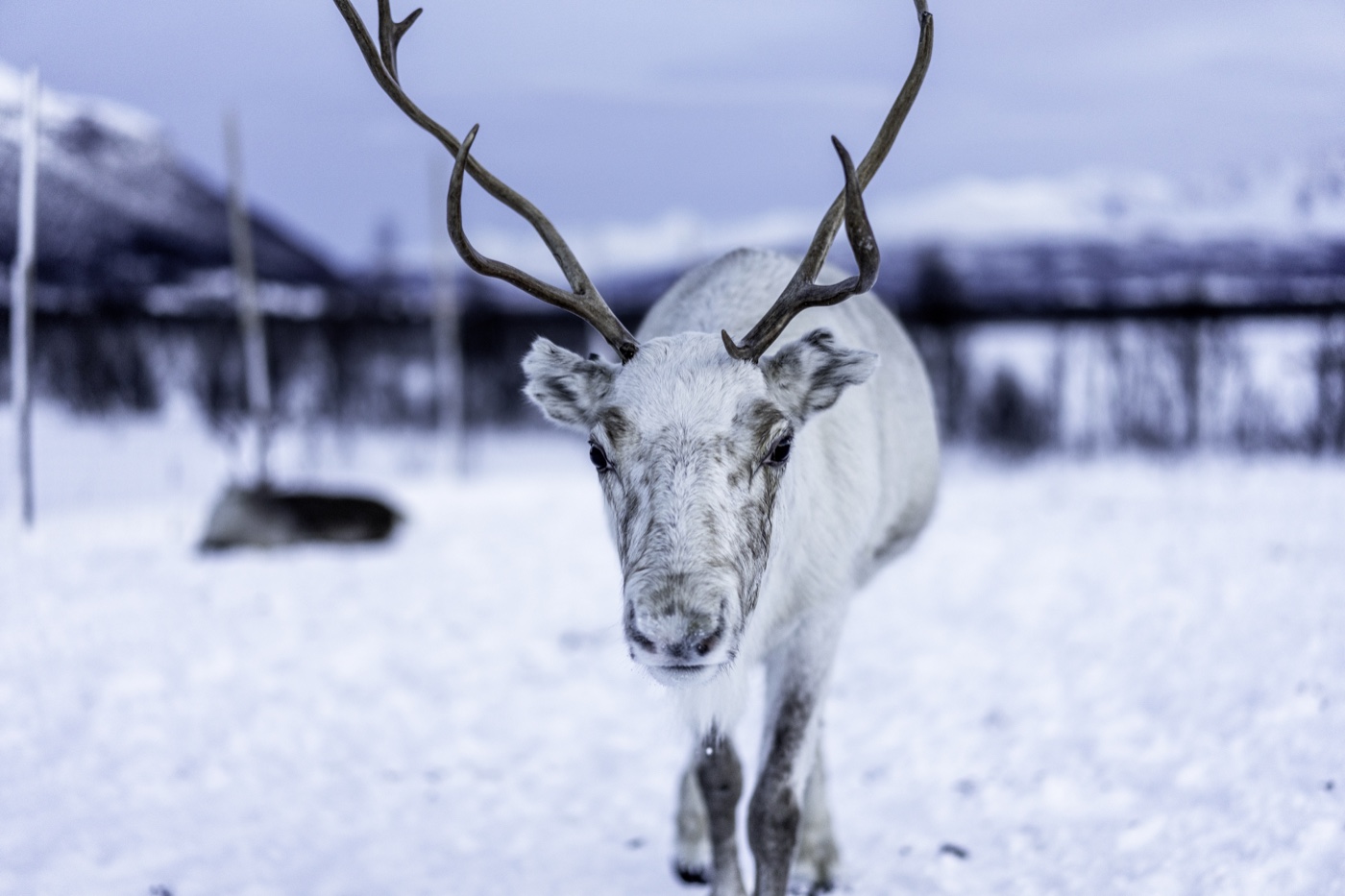
A reindeer photographed near Tromsø in winter.
A reindeer near Tromsø, Norway, 27 December 2022. A contextual photograph; the animal is not identified as one of the adult females in the rumination study. Lorie Shaull · CC BY 2.0

History & recordFirst-party institutional account · 23 December 2023; research online 22 December 2023

The reindeer that rest their brains while chewing cud

Brain recordings linked rumination with reduced subsequent sleep pressure in captive Eurasian tundra reindeer.

Reindeer can keep chewing while their brain activity takes on features of sleep. A study reported in December 2023 examined the relation between rumination and sleep in Eurasian tundra reindeer in northern Norway.

The researchers used non-invasive electrodes to compare activity across seasons. The animals were adult females from a captive herd, studied indoors with controlled conditions. During rumination, their brainwaves sometimes resembled non-REM sleep.

After experimentally prolonged wakefulness, the animals showed the expected increase in slow-wave activity during later sleep. Rumination had the opposite association: more time chewing cud was followed by lower slow-wave activity, suggesting a reduction in sleep pressure.

The researchers proposed that combining digestion and sleep could help animals during the short Arctic summer, when feeding demands are high. The NIBIO account also calls for studies under more natural outdoor conditions. The result does not mean that every moment of rumination is sleep, or establish the same pattern in all wild reindeer.

Source details & what was checked
  • Lars Sandved Dalen / NIBIO, on its ScienceNorway partner platform · 23 December 2023; research online 22 December 2023
    Complete main partner article and provenance statement read: explicitly written by NIBIO communication staff, captive adult females, indoor EEG, rumination/sleep-pressure evidence and outdoor-study limit. Related story branches not certified. Source is free to reader; institutional presentation payment is not an access fee. Writer meaningful web reading; desktop/mobile reader QA remains pending.
    Reindeer sleep while chewing their cud (external source, opens a new tab) · In the source library
Back to sections ↑